Second Objective | New Survivor Mechanic

Prologue
After seeing the recent Ruin changes that made the perk less effective in slowing the game down. Killers are going to struggle against survivors who want to pressure generators like no tomorrow, so I decided to create a second objective for survivors.
My goal with a second objective for survivors is to give the killer more time, while not making it impossible for survivors to escape.
General Changes: Generators
- Generators take 60 seconds to fully repair, down from 80 seconds.
- Good success zones are separated from great success zones.
- Good success zones are 25% larger than normal.
Reasoning
- Reducing generator times should keep survivors moving instead of remaining in the same area for prolonged periods of time.
- Separating good and great success zones should give veterans more of a challenge, this should make repairing generators more engaging.
- Beginner survivors who aren't confident in landing greats can instead play it safe by going for good skill checks.
Fuse Boxes
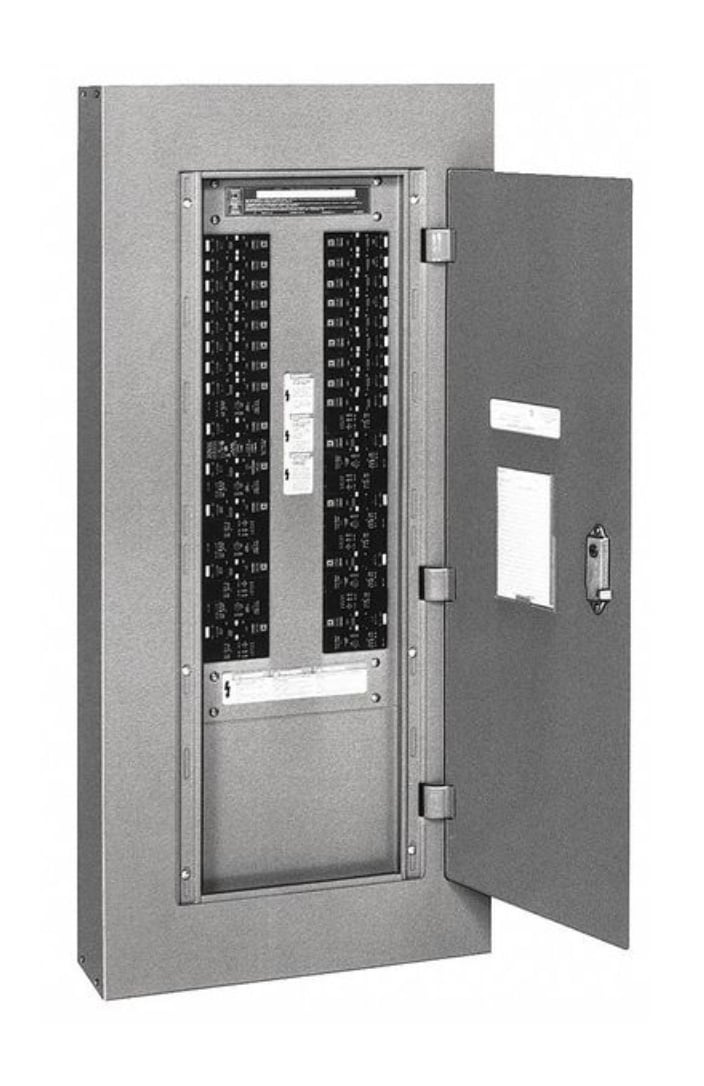
Fuse boxes are a second objective for survivors once they complete all generators. They route power from the generators to the Exit Gates, so it's important they can get as many fuse boxes online.
There are 5 Fuse Boxes in every Trial.
Fuse Boxes stick out from the ground and they have a similar size to Jigsaw Boxes. They have three lights that indicate their progression to everyone.
When interacting with a Fuse Box, there will be 8 switches for the survivor to choose from, with a digital display that survivor can see above the switches. The switches are labeled by numbers, the numbers can be positive or negative. A number will be displayed on the digital display, and the survivor must flip switches to get a sum that matches the displayed number.
Once the survivor gets a sum that matches the number displayed on the digital display, the fuse box will completely reset and a progress light will light up. If the survivor interrupts the action, any switches flipped will remain flipped and the displayed number will remain as it is for the next survivor.
Once a Fuse Box is completed, the EGC will initiate and both Exit Gates can be opened.
Depending on how many Fuse Boxes are completed, you can open the Exit Gates at various speeds:
- 20% the normal opening speed.
- 40% the normal opening speed.
- 60% the normal opening speed.
- 80% the normal opening speed.
- 100% the normal opening speed.
If the killer closed the hatch, both Exit Gates can be opened at normal speed, but completing Fuse Boxes will allow the last survivor to open the Exit Gates faster than normal.
- 120% the normal opening speed.
- 140% the normal opening speed.
- 160% the normal opening speed.
- 180% the normal opening speed.
- 200% the normal opening speed.
The killer can damage incomplete Fuse Boxes and completely reset their progression. Therefore, if a survivor progressed a Fuse Box by two progress lights, the killer can reset the Fuse Box back to zero progress lights.
Epilogue
Hopefully, these changes will give killers more time to sacrifice survivors while making their objective more appeasing. Any feedback is greatly appreciated! 😁🤗
Comments
"When interacting with a Fuse Box, there will be 8 switches for the survivor to choose from, with a digital display that survivor can see above the switches. The switches are labeled by numbers, the numbers can be positive or negative. A number will be displayed on the digital display, and the survivor must flip switches to get a sum that matches the displayed number"
Oh no! My one weakness....Math
This looks pretty good though, just a brain dead thought.
Maybe keys can work on this. It looks good maybe keys will have another purpose if you use a key on a fuse. You can skip some buy using one.
I like the overall idea, I just have a couple of thoughts.
Firstly, a fairly minor thing, while I can see your reasoning for separating the skill check, I think from the perspective of a new player who doesn't understand how they work, it might be more confusing and also make it harder for them to learn to hit great skill checks because doing so is more risky. Skill checks are one of the most frustrating things already for new survivors, so for that reason I think they should be left as they are.
As I said, I like the idea of the fuse boxes in general, but I think you should come up with a different way of activating them. As Elk hinted, a lot of people don't find maths fun or aren't very good at it, and so having a mechanic like that in DBD would just be frustrating and annoying for those people. Especially when you're trying to concentrate on mental arithmetic while paying attention to your surroundings and keeping an eye out for the killer. It may be boring, but I think there are good reasons why generators are as un-engaging as they currently are.
Firstly, a fairly minor thing, while I can see your reasoning for separating the skill check, I think from the perspective of a new player who doesn't understand how they work, it might be more confusing and also make it harder for them to learn to hit great skill checks because doing so is more risky. Skill checks are one of the most frustrating things already for new survivors, so for that reason I think they should be left as they are.
Separating skill checks are supposed to make skill checks more skillful. You shouldn't be able to hit greats every time you get a skill check because the boost it provides makes a huge difference on generators.
If beginners are having problems going for greats, they should simply stick to hitting regular skill checks until they got the basics down. Good repair skill checks' success zone, as you may seen, are increased to give beginners more room for error and should make their experience less frustrating.
As I said, I like the idea of the fuse boxes in general, but I think you should come up with a different way of activating them. As Elk hinted, a lot of people don't find maths fun or aren't very good at it, and so having a mechanic like that in DBD would just be frustrating and annoying for those people. Especially when you're trying to concentrate on mental arithmetic while paying attention to your surroundings and keeping an eye out for the killer. It may be boring, but I think there are good reasons why generators are as un-engaging as they currently are.
Fuse Boxes are the survivor's last objective, and the killer's last defense until survivors can begin to open the Exit Gates. They should require more skill and focus than the objective before it because of that. Furthermore, they can be finished quite fast once players get the basics down, so it should be difficult/risky to complete a Fuse Box as compensation.
That may sound contradicting since the whole purpose of Fuse Boxes are supposed to give the killer time and make the survivor objective more fun. However, it's not the Fuse Boxes that gives the killer more time, it's the time survivors spend traveling the map is what gives the killer more time to do their objective. Subjectively, survivors have more fun, while the killer gets more time.
I understand what you're saying, but none of that actually contradicts the points I was making.
As I said in my first post, my objection to the skill check changes was the fact that they are supposed to make great skill checks harder to hit. Or more specifically, the fact that great skill checks have no safety net around them. You either go for the good skill check or the great one, and if you try for the great and miss, you're screwed. While that does make them more challenging for veteran players, it also makes them more inaccessible to new players.
Yes, when people are first learning the game, they can just stick to good skill checks, and that's all well and good. But there will come a point where they want to try hitting great skill checks, and this makes that learning process way harder for them - more of a learning leap than a learning curve - and every time you don't get the leap right, you fall back to the ground with a thud. Basically, if you don't hit it, that's it, which is a lot more unforgiving than the current setup of if you don't hit it, at least you might get the good skill check instead. The current system encourages players to slowly work towards learning to hit better skill checks, while this new system heavily discourages that because the fear of failure is too great.
When making balance decisions in a game, the designer needs to take into account not only how much skill something will take, but (arguably more importantly) how it feels to play - whether it feels fun, satisfying, rewarding for the person doing it. And I think that the proposed skill check change has the potential to be a lot more demoralising and frustrating to master than the current system, and therefore lowers the quality of the experience overall.
As for the Fuse Boxes, my objection to those had nothing to do with the difficulty, but again to do with how they operate from a UX design perspective. Most people don't find being forced to do mental arithmetic under pressure either enjoyable or rewarding, and a game mechanic that players generally find unenjoyable, unrewarding or simply frustrating to engage with is a problem. That's why I recommended you rethink how the Fuse Boxes function in terms of player interaction rather than just scrapping the idea altogether.