
knell
knell
About
- Username
- knell
- Joined
- Visits
- 7,862
- Last Active
Comments
-
There's a quote attributed to one of the most famous board game designers, Reiner Knizia: "When playing a game, the goal is to win, but it is the goal that is important, not the winning."
In other words, the outcome of "winning" isn't everything, but people playing the game (any game) should always be striving to win. Game designers' hope for their creations are always that the "fun" in their games are derived from figuring out how to fulfill the win condition of the game. "What do I need to do to win? What decisions should I make about the choices presented before me by the game so that I am one step closer to winning?"
True, there may be some folks who may only feel joy when they win. But I think most players being accused of "try-harding" are simply just 'trying' to win - which is exactly what they are supposed to do. In fact, if your "fun" doesn't stem from 'trying' to achieve the goal of the game, then that particular game probably isn't for you. If you just enjoy moving chess pieces around the chess board without capturing anything, you aren't really playing chess. If you just enjoy collecting ammos in a shooting game without actually shooting anything, then you aren't really playing a shooting game. If you just enjoy seeing how long you can last without attacking in a fighting game, then you aren't really playing a fighting game. Do you still have the right to play these games in that way? Of course. But they should remember that they are playing against complete strangers who are doing exactly what they are supposed to do, and that they are the ones sabotaging the game, not the "try-hards."
-
I see some people stating that they are only playing because they've already paid for it.
But how many more hours of playing this game would it take for you to actually quit playing, especially if you are not enjoying yourself for the majority of it?
Even if you had only played 100 hours and paid $100 for the game and its contents, you've already got $1 per hour worth of playtime. Isn't that enough?
Your time is valuable too. Shouldn't you use it on something you can actually appreciate and be content with? Just walk away if this game is making you increasingly miserable or upset majority of the time - not only are you doing yourself a favor, you most likely would be doing other players (those who actually are enjoying this game) a favor too.
-
Hasten Healing -
- 1. +50% healing speed, does it just mean 150%?
- 2. Does it stack with other buffs and debuffs? Does it stack with itself?
- 3. What constitutes "physically demanding feats"?
Electrophobia -
- 1. How much does '5% Hindered' actually do? If they normally run 4.0 m/s, then what are they at '5% Hindered'?
Boon: Safe Haven -
- 1. If this perk doesn't lose its tokens, does that mean once it reaches 3 tokens, it has 5% Haste and 15% increased vault speed until the end of the game? If that's true, does that mean once it reaches 6 tokens, they gain endurance permanently until end of the game (unless they perform a Conspicious Action)?
- 2. Why isn't 'Conspicuous Action' defined in the 'Detailed Information' section? How are people supposed to know what that is if they don't even know what endurance is?
- 3. Does this perk only gain tokens when inside the Boon Totem's radius? Or activates its abilities (5% Haste, 15% increased vault speed, endurance) only inside the Boon Toten's radius? Or both?
- 4. "...does not stack" mean it doesn't stack with other players' Boon: Haven in overlapping areas, or it doesn't stack with other 'Haste' activating perks?
Harming Hands -
- 1. Definition of 'Exposed' under Detailed Information - "...can be downed with a single Basic Attack..." but that isn't true if the survivor has 'Endurance' buff, correct?
- 2. Definition of 'Dying State' under Detailed Information - "...downed by The Killer." But that isn't true for Nicolas Cage's Plot Twist perk, right?
-
@saym said:
"Fast" Robbies should not be subject to MMR as they are now. In other words, the lobby will be created as soon as 5 people gather, so if the queue is split and the number of players is halved, it is expected that the matching time will actually be faster. Also, I think that there are few players who care about matching time because players who emphasize "quality" literally gather in "Quality" Robbies. Finally, by having "fast" lobbies and "quality" lobbies, both players who want "fast" and players who want "quality" can enjoy it (currently neither player can enjoy it), so the player population I think that will increase.
Let's say there is a queue (in the same region, around the same time) that looks like below with its role, MMR, and preferred matchmaking type.
- Surv 500 Speed
- Surv 500 Speed
- Surv 500 Quality
- Surv 500 Quality
- Kill 500 Speed
- Surv 1000 Speed
- Surv 1000 Quality
- Surv 1000 Quality
- Surv 1000 Quality
- Kill 1000 Quality
Now, if there was no preferred matchmaking type, these players would immediately form two lobbies - one with MMR around 500 (top five), and another lobby with MMR around 1000 (bottom five).
However, when you add another variable to matchmaking (in this case, Speed vs Quality of matches), now you will end up with three incomplete lobbies:
- Surv 500 Speed
- Surv 500 Speed
- Surv 1000 Speed
- Kill 500 Speed
- Surv 500 Quality
- Surv 500 Quality
- Surv 1000 Quality
- Surv 1000 Quality
- Surv 1000 Quality
- Kill 1000 Quality
So now you would not only require 5 more players, but those 5 extra players would need to fulfill very precise roles, MMR, and matchmaking preference so that their lobby would accept them. And this is just a simple scenario in which there are only two ratings (500, 1000) - realistically the MMR range would be much more diverse and varied, and if those players had picked "Quality" for those specific MMRs, each one of those would have to have a separate lobby, and would not able to share any of the "Speed" lobbies even if few of them have similar ratings. Additionally, in the example above, it has the ideal 1:4 ratio of killers to survivors. Realistically it may be much more lopsided, dependent on the time of the day, which will also affect the number of accessible lobbies.
Now add "different region/servers" and "SWF" (besides the issues of adding SWF with wide MMR gaps, remember that duo SWFs can never be in the same lobby with 3-man or 4-man, and 3-man teams can never be in the same lobby with duo or 4-man, and that issue is exacerbated if one of the SWF prefers speed while another prefers quality) and you have even more additional variables to consider when forming lobbies.
So in a perfect world with a perfect ratio of players, adding this new variable (of preferred matchmaking type) may benefit the formation of lobbies to the satisfaction of majority of players - but I'm not sure how realistic that really is - and as I said, this may be what concerns BHVR.
-
Since there have been several suggestions in this thread that promoted separating those who want quality matchmaking vs fast matchmaking, I'm going to bring up why BHVR has probably not done that.
By separating the queue into "quality" lobbies and "fast" lobbies, you are actually dividing up the pool of available players. So even if you want "fast" matchmaking, half of the people in the current queue may be unavailable because they want "quality" matchmaking, and therefore you may be forced to wait twice as long - it is no longer a "fast" matchmaking system. Players who want "quality" matchmaking may also need to wait e.g. 20-30 minutes instead of 5-10 minutes also - this would be because even though there may currently be others who are at a similar MMR, they may get immediately pulled into the "fast" lobbies because that's what they had picked as their preference. (although some folks, like me, may be ok with this.)
This game already divides players by 1.MMR, 2. eight server locations around the world, 3. and role (survivor or killer) that they play. (And remember, they want the killer:survivor ratio to always be 1:4 as much as possible.) It is also influenced by the time of day that players are able to play. BHVR may be hesitant to separate the queue further because of that.
-
@Pulsar said:
https://forums.bhvr.com/dead-by-daylight/discussion/comment/3516997#Comment_3516997
Well, it's either that or completely remove any penalty, which I also don't mind.
Just thought I'd try to compromise.
Your "compromise" is simply yielding to the whims of children who are the type to throw tantrums at the drop of a hat. We actually don't want those types of people polluting majority of the matches because they are ultimately detrimental to this game. We want them gone. Personally I rather have a much smaller population of quality adults (at least emotionally and mentally) to play with. And the children need to learn that if they are that unhappy with the game to the point of quitting frequently in middle of matches, they need to move on to other games. That would be a win-win for everyone.
Moreover, this is first and foremost an online multi-player game. People are here to play with other people, and bots will never be able to replace that. It won't matter how good the bots become, or how awful the other players play.
-
@Pulsar said:
https://forums.bhvr.com/dead-by-daylight/discussion/comment/3516911#Comment_3516911
The bots are better than most players.
Remove DC penalties. This encourages players to give there team a bot. However, prevent players from re-queing until the bot dies or escapes.
Everyone's happy. The player isn't stuck in a match they don't want to be in, their team isn't screwed over and neither is the Killer. Everyone's happy except for the people with zero empathy and people who enjoy making other people miserable.
Remove DC penalties. This encourages players to give there team a bot. However, prevent players from re-queing until the bot dies or escapes.
So players who don't want to wait until the bot dies or escapes will continue to just kill themselves on hook. How does that change anything? This will only reinforce childish, immature behaviors like disconnecting right before the player is sacrificed or moried.
-
@Peanits said:
https://forums.bhvr.com/dead-by-daylight/discussion/comment/3516013#Comment_3516013
Not sure I follow, but it works something like this:
- You search for a match.
- The game tries to find you a match with other people close to your rating.
- If a certain amount of time has passed and it can't find you a match, it slowly starts to expand the search range.
- The range expands until you find a match OR until it has expanded to the maximum range.
It doesn't prioritize anyone in particular, but the people who would notice it most are the people on the very low or very high end of the spectrum since there tend to be fewer players at the extremes. Since there's far more people around the average skill level, it's not common for the matchmaking system to expand much- if at all- before they find a match. But that said, the maximum expanded range means that players on the super low end and on the super high end would never be matched together, no matter how long they wait.
I guess what I was wondering is when the matchmaking expands, it should be much easier for the middle 80% of the ratings curve to immediately find a game with each other than for the top and bottom 10% to find a game with players within that 80%. Just wanted to make sure that top and bottom players are not being matched with each other because everyone in the 80% had already found a match amongst each other. It sounds like it's not - thanks.
Few more questions:
1. You said:
"The vast majority of matches are already within a very close margin where your odds of winning vary by a few percent."
What percentage of current matches require the game to expand the search for players beyond what BHVR would consider a fair match for all players?
2. How well does MMR predict the escape outcome for SWF games vs solo-que games?
3. Any progress made on the backfill issues caused by lobby dodging? Mandy had suggested locking the lobby - could we at least test that out to see if it would improve the quality of matches?
-
@Peanits said:
https://forums.bhvr.com/dead-by-daylight/discussion/comment/3515937#Comment_3515937
I think there may be some misconceptions here, so I'll do my best to clear them up.
The game does use an MMR system for matchmaking and it has not been removed. That said, not every match will be perfect. Matchmaking systems need to balance match quality and queue times carefully. If it prioritizes making the absolute perfect matches every time, you're going to wind up waiting a very long time for a match. While some may be okay with that wait, others don't care as much and would rather play sooner. It's a tricky thing to perfect and something we're always tweaking to improve. The vast majority of matches are already within a very close margin where your odds of winning vary by a few percent.
There are some extreme cases where this is not possible, though. For example, if there aren't enough players near your rating playing in your area at the time you're playing. In cases like this, the matchmaking system has to gradually expand its search range until it can find you a match, otherwise you may be waiting a very long time (possibly forever). This scenario is fairly uncommon, and while it's unfortunate, there's not much we can do there. The matchmaking system can only work with the pool of players that are available to it.
But as far as levels go, they mean absolutely nothing and have no impact on matchmaking. If an expert survivor happened to pick a new character this match, they aren't suddenly a terrible player. Especially since the progression overhaul, they even have access to most perks right away. The same goes for grades and prestige; they have absolutely zero impact on matchmaking and do not reflect someone's skill in any way.
The exception to this is the PTB. Matchmaking ratings are not used on the PTB since there are not enough players on the test build to create quality matches. Therefore, it's disabled and you can be paired with anyone.
When the matchmaking system "gradually expand its search range," does it prioritize the outer ends of the population bell curve? For example, if the MMR ranges from 0 to 100, does it give priorities for 0s and 100s (with the least numbers of players) over 10s and 90s so that 0s will much more likely to be matched with 5s and 10s, and 100s will be matched with 95s and 90s, instead of the least number of players being stuck with each other (0s and 100s being matched together because of the difficulty in finding others with similar ratings) From the complaints sometime heard on the forum (I don't know if it's true or not) it sometimes sounds like brand new players are going against players with thousands of hours - to the point where it's hard to believe that there is absolutely no other players in between those skill levels during that time in that region. Or do all of those cases occur only because of random backfills? ...any progress made on the backfill issues?
-
Made a thread earlier about this - didn't realize it was a duplicate. Can't believe it's been going for four months.
Platform - PS5
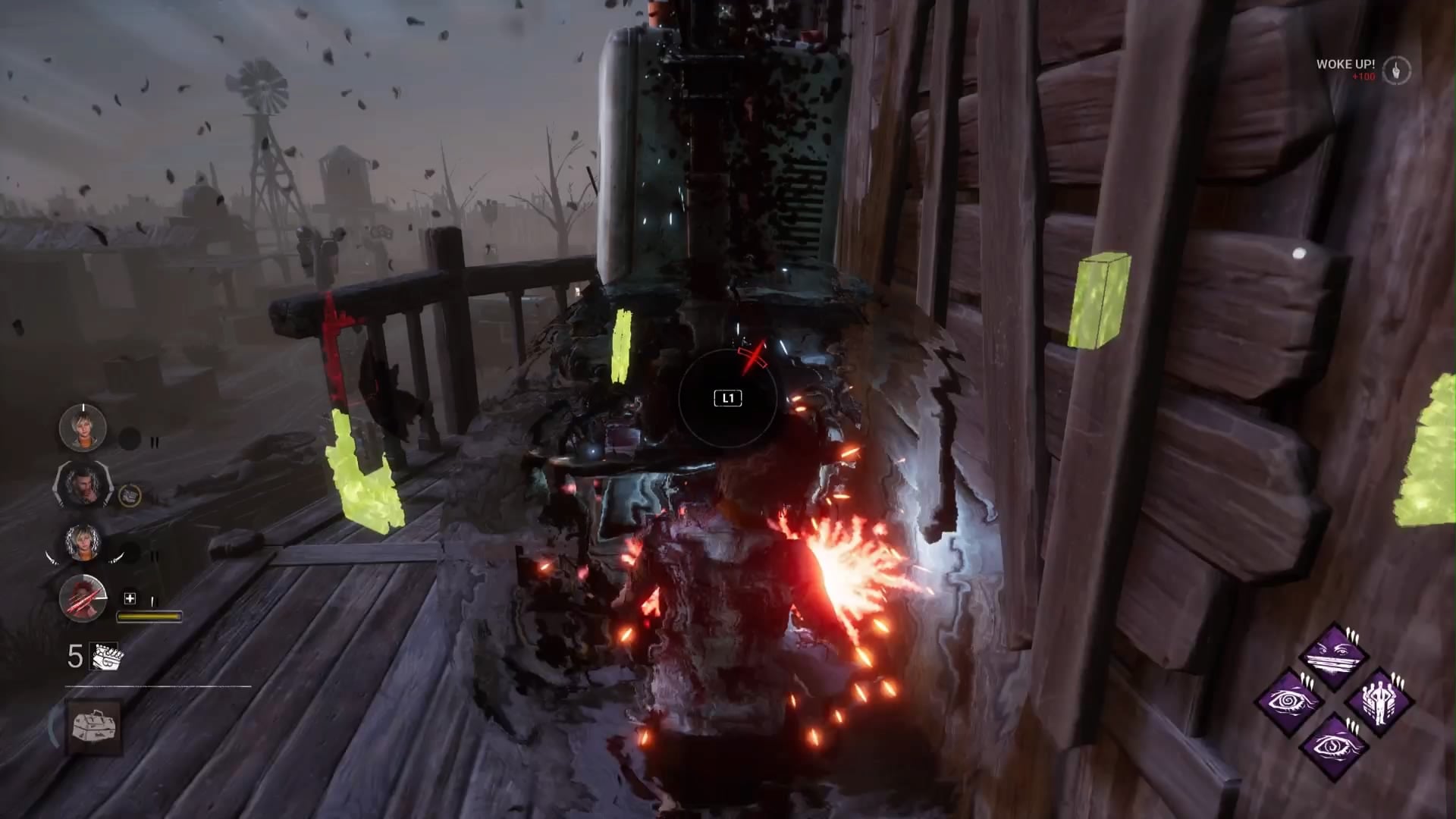
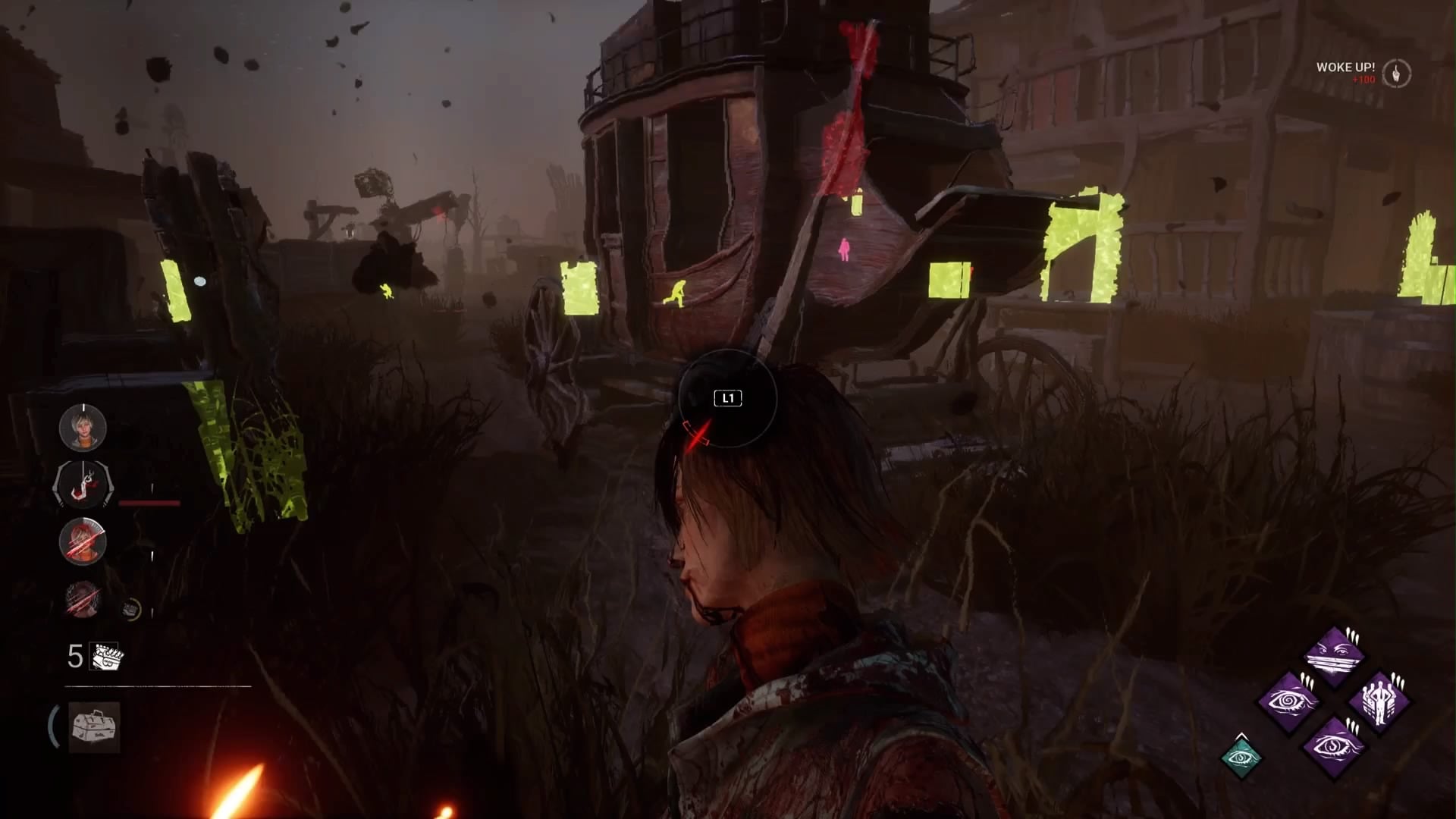
Issue - Hitting all skill checks, but at the 7th skill check on one generator, and the 10th skill check on another generator, despite the arrows being right in the middle of the skill checks, turn red and exploded. (Also can provide video evidence if wanted)
Reproduce - it happened recently before, but don't remember the circumstances. This one was against Nightmare, both time in the Dream World.
Is it maybe possible that the skill checks for Merciless Storm is being overlapped with a normal skill check which we can't see?
-
They should just take away the self unhook mechanic unless they are using a special perk for it. They then decide to AFK, troll, or work with the killer? Get them banned. Make the ban much more harsh after the first one. Make the decrement slower and longer lasting. We really don't need hand-wringing children whose parents never taught them to tough things out to be playing games (of any kind). Don't like the stuff that could happen to them within a multiplayer game's rules and mechanics to the point of quitting in the middle of it? Then that game isn't for you. Stop wasting everyone's time.
-
Is it maybe possible that the skill checks for Merciless Storm is being overlapped with a normal skill check which we can't see?
-
@Mandy said:
https://forums.bhvr.com/dead-by-daylight/discussion/comment/3511179#Comment_3511179
you are aware that I'm not a programmer or designer etc and that the Community Team does not make decisions for those other departments? My idea is one idea and yes it would actually work in solving the issue that is lobby dodging in general - players have always dodged lobbies it's been something that's happened since the game began, maybe it's time that lobbies were locked when you join them - I don't really see anything bad about that.
Assuming you have already brought forth this long-time concern from the community to the other development teams while ago, and that you have also already gave them your suggestion of locking lobbies, why has it not been tested yet to see if it helps? It would seem like it would be one of the top priorities to help new players to stay.
-
How about 1 (or 2, or whatever is more balanced and doesn't change the kill rate) radius complete visibility and everything else completely black? That way there is the added benefit of having less inconsistency between monitors (/pc) and televisions (/consoles) also.
edit: I think part of the problem is that players end up straining their eyes because of the different levels of gray/darkness that Dredge creates - if it's totally black, it would address that problem.
-
@Peanits said:
https://forums.bhvr.com/dead-by-daylight/discussion/comment/3504052#Comment_3504052
We could definitely look into getting some updated kill rates sometime! I don't think they would be shared as regularly as perk stats, however, since larger Killer updates tend to take quite a bit longer than perk tweaks, so it's unlikely that they'll change much from one update to the next.
@Mandy said:
https://forums.bhvr.com/dead-by-daylight/discussion/comment/3504069#Comment_3504069
We're looking at doing a variety of stats, so it's not inconcievable that addons will be covered in the future - this is not a guarantee though.
Will you also give us some stats on the Solo-SWF gap? Did the new hud help? Any difference between Solo-SWF gap at high, med, and low MMRs? How about Solo-SWF gap for different killers? Are the gaps for, say, Cenobite or Skull Merchant, the same as for Wesker or Huntress?
-
I kept getting a trophy every time I loaded in (since yesterday?), and thought they were just ones that I had earned on ps4 - but I just got the "Swirling Death" trophy from the Huntress and I knew I haven't thrown 1000 hatches. I'm guessing this is what it is - I was afraid someone was playing on my account or something.
-
@CrypticGirl said:
"Currently, SWF can communicate to the other members "hey killer is camping - everyone keep doing their generators." Solo-queue players right now have no method of communicating that to the other survivors. Due to this, the new upcoming anti-facing camping mechanic would widen the informational gap between SWFs and solo-queue even more."^ This is why I always run Kindred, so I can see the Killer facecamping, and see where the teammates are so I'll know whether I need to make the save or not. Or if I'm the one being camped, the teammates will see that as well thanks to my Kindred.
@Slan said:
https://forums.bhvr.com/dead-by-daylight/discussion/376066/anti-face-camping-mechanic-addendums
About hook times, with Reassurance in a game it can take looooong for somebody to die on the hook. The hook times are fine as they are now that said perk is a thing now.
Then, you say that soloq survs. cannot say that a killer is camping, I disagree. Kindred does that for you, showing everyone a facecamping killer. If Kindred is not in the game, then raise and lower your arms, I remember seeing many survivors doing that when a killer was camping and it was quite effective.
Kindred is helpful, I agree. I use it frequently also. But the whole idea of Survivor HUD was to give solo-queue players the same information that are available to SWF members without the need to use up a perk slot - after all, the information is available to SWF without the need to fill their perk slot, right?
In addition, Kindred actually has an advantage and a disadvantage that differ from SWF communicating with one another. First, the advantage: In SWF, if the hooked player lose sight of the killer, SWF would not be able to inform other survivors where the killer is - but with Kindred, even a solo-queue is able to pass that information along (and even more accurately) as so long as the killer is within 16 meters. On the other hand, SWF has an advantage over equipping Kindred when the killer is under the Undetectable status. Even if the solo-queue has Kindred equipped, they would not be able to inform the other survivors when the Undetectable killer had looped back and is even standing right in front of him/her - SWF would not have any trouble relaying that information since the killer is visible to him/her.
So in regards to "information," Kindred has a slightly different function to what SWF have without having to equip the perk.
Back when the game first started and the gaming population was in its infancy, there was a general consensus that the "raising and lowering your arm repeatedly" meant that the killer was camping in a nearby area. But I think right around when console versions were added to the platform, there was an influx of new players who started claiming that the "raising and lowering your arm repeatedly" meant "come here" or "hurry up!" So there was a massive confusion between the older players and the newer players on the forums without ultimately any consensus about the issue. And then some players also do it for absolutely no reason/or for entertainment purposes because they are streaming or are in SWF. That is why I'd like a pop-up that would serve the same function, without any confusion of "well, what does that mean" between the players.
I'm sure from the Killers' perspective, 30 seconds of Reassurance probably feels like a long time - but from a solo queue perspective, when you have to first run to within 6 meters of the hooked survivor, and then run back to the generator to make some progress, and then run back to the hooked survivor before they either hit the next stage progress (and you repeat the same process) or they die, the advantage of using the perk is almost non-existent. (Although if you are in SWF, and others have the information of what you are doing with Reassurance, then they can efficiently utilize the time to make progress on the gens instead of getting on and off the gens themselves.)
@Emeal said:
I think the anti-face-camping mechanics need to be stronger, You could add a Power cooldown, but then the facecampers would just tunnel and m1them instead.
bHVR ought to make the face-camp timer cause the Killer to get teleported to the otherside of the map and then get a 10 sec cooldown. That would PROPERLY give Survivors a chance to reset, yes even for mobility killers.
See the problem is if the Killer is just outright refusing to play ball with the game, specifically tunneling one person, could be a streamer, could be a nobody. a free self-unhook isnt going to change that much, they will be tunneled off the hook right and way, and that WILL make the face-camping tunneling experience the exact same as it is now, it just does not require a survivor to unhook.
But the extra Survivor isnt the issue, Yes the rest of the team is gonna do gens and the Killer will lose the match. But you are basically hoping to still use one survivor to experience off the hook tunneling, facecamping, off the hook tunneling to some how teach the Killer to not face-camp? It wont work and its a terrible experience for that one Survivor.
If you teleported the Killer away, instead the Killer could perhaps learn to play the game instead of us accepting that the Killer made the choice to face-camp. Your community obviously want to not be USED and have to experience a game where they dont do much, that is why a anti-face-camping mechanic MUST teleport the Killer away + 10s powercooldown, give them time to reset, give them a chance to hide and also give the facecamper a chance to learn by forcing them away.
I may sound pretty radical killermain here, but there is no doubt in my mind that the antifacecamp meter + teleporting the Killer away is the best solution to ensure the quality of match for both the facecamped survivor and in time the face camping Killer.
I beg of you bHVR try it and give the community a chance to try it too. pls pls pls
Part of the problem is that camping/tunneling is the overall best strategy for killers in most circumstances - instead of them being a situational or niche advantage. But if BHVR really wants to tackle the issue, not only should they make camping/tunneling less powerful, but they definitely need to offer alternative game mechanics/strategies that are more powerful so that they can maintain the current kill ratio. Right now, killer players just don't have enough incentives to use any other strategies.
-
Just started on the "The Last Place You Look" challenge (Unlock 8 chests) on Tomb 13 Level 3 (PS4 US Eastern Region), opened 3 chests, but did not get credit for any of them. I noticed that there were lots of other challenges that weren't keeping track of completions also (I think mainly in the Halloween Tomb) in the last week or so.
-
@Seraphor said:
https://forum.deadbydaylight.com/en/discussion/comment/3254025#Comment_3254025
I'm not sure where you're getting the idea that "accuracy" is contingent on a faulty win condition.
Like I said, you have this notion of "intended win condition" or "true representation of the survivor win condition" and now, "faulty win condition." And like I stated, I don't.
-
@dugman said:
https://forum.deadbydaylight.com/en/discussion/comment/3253887#Comment_3253887
The problem is the devs have never actually clearly defined the win condition for the survivor side. Sometimes they act like it's every person for themselves, sometimes they act like the survivors are supposed to win or lose as a group. It's an underlying base issue behind a few problems in the game like some people sandbagging or ragequitting because "they" lost even though the rest of the survivors might be ok and could all escape, or people who think "pips" are the goal or bloodpoints or what-have-you.
As far as MMR goes, though, they're sort of shifting the win metric from "individuals escaping" to "how many survivors escaped". Personally I think it would maybe be even better if it literally was "If 3-4 survivors escape all the survivor MMRs go up, and if only 0-1 escape they go down, with no change on 2 escapes". That would be even more crystal clear as a win/loss condition for the survivors as a whole then the "you still lost for MMR purposes but not by as much if others escape" type of thing. (Basically semi-cooperative game design is usually bad, DbD unfortunately isn't an exception.)
Like I said, to me, it's pretty clear what the current game objective is - "Escape the Trial." That is what is mentioned in the tutorial/game manual and their official website. But it's obviously confusing a lot of players, so like you said, BHVR should probably clarify what the game objective is, given that win condition is what MMRs are usually based on.
But it's also important to remember that the win conditions define what metrics and variables are used for MMR - not the other way around (MMRs don't define what the wincon is). Like I mentioned in the very first post, developers in some games would add secondary variables (usually players' performance levels) to their "MMR" so that their players can be transferred much more quickly to their general range of MMR, but that usually comes at the expense of MMR's accuracy level. These game developers adding secondary variables don't change the actual win conditions of their game - which is why it introduces slight errors in the algorithm. But for them, it might be worth it, which is what I'm wondering if it's the same case with BHVR. (Or if they had found some way to maintain or improve their accuracy level despite adding secondary variables to their MMR - and if they did, I'd like to know how they accomplished that.)
-
@Seraphor said:
https://forum.deadbydaylight.com/en/discussion/comment/3253887#Comment_3253887
"Escaping the trial" is vague, that's the issue. Is it personal? Is it a team based goal? BHVR doesn't have a clear stance on that, and yet the MMR system which attempts to quantify this win condition, does impose a clear stance, despite the almost intentional nebulous interpretation of the win condition.
Either way, your contributions as a team member affect the outcomes for other survivors. You play well, you help the team, you increase the chances of some or all of you escaping.
You can repair 3 gens and then get killed. The 3 gens you repaired might enable other survivors to escape.
You can run the killer for 5 minutes allowing other survivors to repair gens, who might then escape while you get camped.
You might make a last minute altruistic play and trade your life for another survivors, who escapes.
None of these things should be discounted. (they currently are)
Conversely, you can escape the trial as the last remaining survivor, despite the fact that your three team mates died at 5 gens. That should also not be discounted. (as it currently is)
To discount any of those things completely invalidates MMR as it applies to the win condition.
The way they've proposed implementing team-based MMR changes isn't a drastic shift away from what already happens, it's merely an additional multiplier.
They've stated that an escape will still result in an increase in MMR, and a death will still result in a decrease in MMR, but the amount at which your MMR increases or decreases will scale depending on the fate of other survivors.
So if you sacrifice yourself to allow three other survivors to escape, your MMR still goes down, but not by nearly as much, which would allow you to claw back some more MMR the next time you do escape.
If you're routinely playing well enough to aid your team mates, so that sometimes you escape, and sometimes your team mates escape instead, you will average a positive MMR. Whereas currently, you could average a neutral or negative MMR despite playing well and influencing a positive win condition for the team.
This isn't sacrificing accuracy to appease the playerbase. This is improving the MMR's interpretation of the win condition, to more closely align with the intended win condition.
I'm not sure what's vague or nebulous about "Escaping the trial." Why would you assume it's a team-based goal? As it stands right now, it's clearly written that survivors' objective is for them to escape the trial, nothing more and nothing less (that is, unless it's written somewhere that the majority of the survivors must escape to win.) Again, is the current objective for survivors a good win condition for this game? Maybe, maybe not, but it is what it is. Look, I'm not advocating for one game goal or the other - I'm saying that the way the current win condition is spelled out by the game, this change would normally make MMRs less accurate than it would otherwise. And even if it does make it less accurate, may be that's a sacrifice BHVR is willing to make - I'm just wondering if that's the case. But if isn't, and that's a problem, then one way to solve it is for them to change the game objective for survivors to clearly be team-based.
I think the discrepancies in our understanding is that you have this notion of "intended win condition" or "true representation of the survivor win condition." I don't - I'm simply going by what BHVR has written in their tutorials and official website.
But all of this don't really particularly matter in this thread. I've actually had this same discussion multiple times in the past. I was just wondering statistically, whether BHVR was able to find some way to make the MMR more accurate despite adding secondary variables, or they just came to the conclusion that its accuracy isn't as important as some other factors.
-
@Seraphor said:
While these are secondary factors, they're still related to the win condition of the game, being escapes.
The problem before was that survivor MMR was only influenced by their own escape rate, but that's now how survivors play. Survivors generally play as a team, and the actions of one impact on the results of the others. So personal escape rate wasn't a true representation of the survivor win condition.
MMR is always going to have accuracy issues, but survivor MMR simply wasn't representative of the true survivor win condition. So team-based factors are less about improving accuracy, and more about representing a true win condition.
Dying over and over again because your team mates screwed you over, or because you sacrificed yourself for you team mates, despite you personally playing well and contributing to the teams success, wasn't just inaccurate, it wasn't representative of the players skill, at all, it was in fact inversely correlated with the skill of the player, and that's the whole problem with survivor MMR.
As it is currently stated in both the game tutorial and in their official webpage, for survivors, 'Escaping the trial' is their win condition. Nowhere does it say anything like, 'Have 2 or more survivors escape the trial to win.' Would it be a better game if that was the case (like in most many vs one asymmetrical games)? Possibly - but that isn't what it is currently. Which is why I asked, "Have BHVR ever discussed the possibility of changing the wincon of the game?" I made it a point to emphasize that the MMR doesn't determine the game's win condition - in fact, the win condition determines how the MMR is calculated. Like I stated, for MMR to accurately reflect the players' ratings, they usually just go the values reflected by the wincon. I'm just curious if BHVR found a way around it to demonstrate better accuracy somehow, or whether they are just willing to loosen their accuracy to appease the playerbase, as well as their contradictory end-game design.
-
@Jarky said:
It's a very good question - I believe they also have your average SBMM rating for all your killers stored somewhere, so it may potentially use your average to determine if your average is what people need.
Unless the developers are assuming that players are able to play all the killers at a similar skill level, then it wouldn't work very well. (But if that's the case, then why would they separate the ratings in the first place?)
For example, let's say I only have played the above three killers - 900, 1200, and 1600. If the game averages my ratings (1233) and thinks that I'm a "1200" player, but I choose to play the 900 Nurse or 1600 Spirit, then it wouldn't actually help speed up or tighten the matchmaking in any way.
-
@Peanits said:
I just want to start by saying that none of these are bad ideas. On paper, they all make sense. Actually incorporating them into a matchmaking system is where things start to get tricky.
For starters, let's look at just perks. Someone has to subjectively pick which perks are meta, we cannot base it solely on how often they're used. A perk like BBQ & Chili is incredibly popular, but I think we can all agree that it's not because slapping it on will carry you to victory. Applying a penalty to it wouldn't make a whole lot of sense. So already, you need to selectively apply penalties to perks and also determine how much of a penalty each one should carry. This is already highly subjective and I strongly doubt that you could ever find a value for each one that everyone considers fair. There are bound to be loads of disagreements over penalties (e.g. This perk has too much of a penalty. It's not even that good. Now I get super tough matches just for using it.)
This also does not factor in the fact that not all perks are equal. Some perks are stronger when combined with other perks/add-ons. Take Dead Man's Switch, for example. On its own, it's okay. Put in on a Killer like The Artist that can easily force people off of generators and it becomes much stronger. How do you apply a single value to it that doesn't discourage using it on other Killers while also fairly penalizing it on ones that can make full use of it?
All that aside, these penalties/bonuses are redundant when it comes to how a matchmaking system actually works. By design, using strong things inherently increases your chances of winning. When you win, your rating goes up and you'll end up against tougher opponents. Put simply, the matchmaker does not care how you got there. It doesn't care if you're a perkless legend, it doesn't care if you run meta every match with ultra rare add-ons. What it cares about is your chances of winning, and its' only goal it to pair you with people where your strategy (whatever that may be) works about half of the time. When it stops working more than half the time, you plateau and stop climbing. This doesn't mean that you're a great player because you have the best stuff, it just means that the matchmaker has successfully put you in a place where you're no longer pummeling new players.
Adding another layer of prediction on top of that would only make this worse, and would only be of benefit in a scenario where you can see your rating (and it actually mattered). Say you're a 1,500 player, but you're running really good stuff so the game treats you as a 1,700 player. If you lose your match, you only get shoved further down into matches with less experienced players who are not prepared to deal with the meta you're running. In a scenario where you can see your rating and it means something, sure, this matters. This stops someone from artificially boosting their rating by running all the best stuff. This is not, however, the case. Your rating means nothing beyond placing you in matches where you've got an equal chance of winning and losing, and it already does that without predictive penalties & bonuses.
You should really sticky something like this at the top - or make a FAQ which includes information like these that lay out the basic fundamentals of how matchmaking systems like ELO/Glicko/TrueSkill are usually created, and why they usually only consider win conditions and not players' performance levels within each match. Of course, most people aren't here to learn about how matchmaking systems usually get made, and rather just lash out and vent at things they don't understand, but I'm sure there are always few people who are genuinely curious about MMR and the theories behind it.
I'd also mention about the difference between MMR and how the actual matchmaking gets made. As in, the difference between the algorithm to rate players, and the overall matchmaking that includes that algorithm, but also takes into account for things like players' queue times and the server/player location. There are too many people on the forums that don't seem to understand that even if SBMM is functioning correctly, they may constantly end up with opponents who shouldn't be in the same ratings in their matches due to BHVR's decisions to alleviate queue times and/or to make sure players are not lagging in their matches. Every pvp online games have to balance those elements out - but for some reason, your forum members seem to believe that it's because of SBMM.
This also does not factor in the fact that not all perks are equal. Some perks are stronger when combined with other perks/add-ons. Take Dead Man's Switch, for example. On its own, it's okay. Put in on a Killer like The Artist that can easily force people off of generators and it becomes much stronger. How do you apply a single value to it that doesn't discourage using it on other Killers while also fairly penalizing it on ones that can make full use of it?
It's not just perk-perk and perk-addons synergy, but also random elements like perk-maps or addons-maps synergy. So even if you somehow miraculously figure out a specific value to the likelihood of increase in meeting the win condition for one particular perk, then you would need to assign multiplier values in relation to every other perks, addons, maps, etc. Oh, and every time there is an update to the current state of the game, make sure to repeat the whole process of re-adjusting the value and their multipliers for every single perks/addons/maps/killer powers/etc and how they all interact with each other again! Right, seems doable.
Overall I'm glad MMR was implemented in a way that it did. Hopefully it's revealing a lot of balance issues in the game - you've already mentioned the SWF problem, but MMR should also have shown massive problems at the top and bottom - not just balance-wise, but player population too. Not enough players at the top? Then perhaps BHVR should be lowering the skill ceiling, or making it easier for more players to play like the top players (e.g. adding keyboard and mouse support may increase the player population at the top, etc.) Not enough players at the bottom? Then maybe BHVR should add in a more intricate practice mode with individual killers and map options so that newcomers can jump into the multiplayers with more knowledge and confidence. There are lot of things needed to make the game better - MMR should be revealing those things very clearly right about now.
-
@BusterHighmyn said:
https://forum.deadbydaylight.com/en/discussion/comment/2873942#Comment_2873942
Idk how but I just went through a long ass comment, edited a typo and ended up deleting it, explaining what I will here tldr
where I see your point... two things i wanna point out are 1) using any team game as an analogy is disingenuous bc the argument relies on putting all the responsibility of a team's overall goal (outscoring the opposing team) on one's shoulders.
an easier analogy, imo, would be an MMA fight.
what the other side of the argument is saying is this...
if a fighter, based on an average of 10 5 round fights, is up 4 rounds to 0 going into the 5th (which he also dominates on the scorecard) is knocked out with 10 seconds left, does that really mean he's the unskilled fighter of the two?
where your point holds water in that every decision up until the point a win or loss is determined matters and essentially is voided out bc, despite performing better for longer, the fighter still technically lost, I just want to address the second point I mentioned earlier and why it causes this dilemma.
rng.
when a survivor loops the killer without being downed, does gens and unhooks other survivors the whole match just to get caught by the killer at the precise time the last Gen finished and noed procs, camped and left to rot by all the other survivors....where I do see and Agree with both point of views, neither can be implemented due to the rng factor essentially flipping the outcome of a match on its head at the drop of a dime.
where one side is right in they did show "skill" all match in everything they did, truth is they died.
and where the other side says, you lost and well, the goal is essentially to win (escape) the fact that they were killed isn't necessarily a representation of a lack of skill, just the outcome of a random, inconvenient circumstance.
It's important to understand that the utility of MMR is even more important and helpful in games with RNGs. As I emphasized in the previous posts, MMRs account for *everything* that happens within the game, and that includes elements of any RNGs. So *over the course of many games*, MMRs will still end up matching players with similar skill levels - if it doesn't, then it indicates a more of a problem of a balance issue (e.g. - RNGs only favoring certain players.) That doesn't question the validity of MMRs - just the balance problems.
As I stated previously, MMR works for *any* pvp game. It doesn't matter whether it's 1v1, 10v10, or 1v10. In a team-based victory games (like basketball), each players within the team is absolutely responsible for the whole team. It's never enough to just to know the individuals in your opponents' teams, but they should be able to understand the strengths and weaknesses of the players in your own team, and cover for them (and be covered) in order to attain consistent victories. Sure, assigning specific 'positions' or 'roles' in team-based victory games should mitigate some of that, but if that isn't enough, then "not-my-job" type of attitude often leads to instability within the team, and then losses. Ultimately, individual players are responsible for winning or losing as a team, regardless of whether people think that's unfair.
This is why the biggest names in MMRs like ELO and TrueSkill base their algorithm mainly on win/loss only, and not on individual performances - so that individuals don't prioritize their own personal goals over the team objective.
Here's what the creators of TrueSkill has to say on the matter:
"It is interesting to note that Elo’s update equation depends only on the win/loss outcome. Similarly, TrueSkill’s update equations take into account only the finishing order of the players/teams involved. None of these systems incorporates the actual final score, say, the number of kills in a shooting game or the finishing time in a racing game. This is a deliberate choice.
First, taking into account only the finishing order makes these rating systems universal because in almost any game a finishing order can be computed from the detailed game outcomes.
Second, it is crucial that the purpose of the game and the behavior of the rating system be aligned: people striving for high ratings should be forced to play in accordance with the spirit of the game. Taking the margin into account by which a game was won can be very misleading. As an example, consider a player who is trying to catch up with the opponent before the time is up, thereby taking into account the risk of falling further behind due to counter chances of the opponent. Should the rating system be designed to discourage this fighting spirit?
For the updates of the individual players’ scores in team games it is crucial to consider the finishing order of the teams only. If individual performance metrics are used in the rating system players will aim at maximizing those metrics instead of teaming up with their team members and try to win the game. For example, if you choose to reward the number of flags scored in a capture the flag game, do not be surprised if you find everyone rushing for the flag at once, but also some dead bodies who died with the flag in their hands betrayed by an overly ambitious team mate."
I'll also post an opinion piece by Sirlin (a blogger who is most known for balancing games) in regards to TrueSkill when Overwatch's matchmaking was a concern to him:
"TrueSkill intentionally and explicitly does NOT use any individual performance metrics. Their argument is that no matter what game you're talking about and no matter what metrics you measure to determine how well a given player did, it's necessarily imperfect compared to using only win/loss. The point of trying to guess if a player did well or not is how much they contributed win/loss, but the win/loss stat is the most accurate measure, they say. You'd introducing error by adding ANY other metric.
In addition to introducing error, you're warping incentives. For example, if you measure "damage done" as one metric, then it means players will attempt to maximize "winning AND damage done" rather than just "winning," which is not great. You can also very easily accidentally do a lot worse: you might accidentally give incentive not to play support heroes in a game where you really need support heroes on your team. (It seems this is already true in Overwatch.)
In many cases, it's almost hopeless to even devise a metric. If a character's role has to do with healing, you can't actually use how much they healed as a measure of much. If you did, it would penalize a healer on a team that played so well they didn't need as much healing. Or even worse is a character like Mei. Her ice walls can do a lot, her slow and freeze effects can do a lot too. But to actually quantify that into a metric correlated to win-rate? That's a huge error effect waiting to happen. My friend suggested the best metric how effective you were with her is to monitor the opponent's chat to detect how much they are cursing about Mei.
Yet another issue is that it's easy to accidentally create competition within a team for no real reason. For example, if number of kills is a metric that affects your rating, then your teammate killing an enemy that you could have killed essentially "stole" ranking points from you. That's clearly a bad dynamic.
I think Microsoft TrueSkill's reasoning makes sense here. It's a good case against ever using any individual performance metric when adjusting ranking points after a win or a loss."
https://www.sirlin.net/posts/tag/Overwatch
But above, I'm speaking of team-based victory games, which DBD isn't. It's important to note that in DBD, in which working as a team is only relevant until the point where each player can assure their own individual victories, players' need to understand where that 'point' of turning is in the game becomes part of their important skill set to have.
____
Like I said, MMRs will work for any pvp game, and that should include MMA in your example. Granted, I don't know anything about MMAs, but in principle, everything is the same. One of the MOST important aspect of understanding MMRs is that it's not just about one match - it's about series of matches, and where the players are flowing within it. Each individual matches don't matter, nor do they say anything about players' skill level. After all, as you said, there is always RNGs, or just some lucky punch. But when you monitor a sea of matches, and see the general direction in which the player is going, that actually gives a better picture of what is happening.
So let's take a look at your MMA fighter over a series of say, hundred different matches. As you say, they may have been just a skilled fighter in a "unlucky situation." But if "luck" is actually the only reason they lost, then out of hundred matches, how often do you think they would actually be losing? Probably very few. After all, their opponents (who, in your example, are less skilled) will *also* have to occasionally face that same "unlucky situation" and lose, in addition to losing due to their own lack of skill. If you translate this to MMRs, you'll see that your MMA fighter would generally be increasing in number, despite some dips here and there.
But let's take a look at another situation in which your MMA fighter *claims* that he's really skilled and only losing due to "unlucky situations", but their MMR seems to show that he's losing vast majority of his games against his opponents - say, losing 90% of the time. Well, what does that mean? There are few possibilities, and none of it has to do with "luck." 1. What they believe is "skill" - actually isn't. Let's say your MMA fighter trained hundreds of hours to perfect this one particular combo in which he jumps up like a pole vaulter, doing a triple axel in the air like an ice skater, and landing with a fury of punches from the air - he claims that he is skilled because A. it takes lot of training and effort to accomplish such feat, and B. because nobody else in the MMA can do it.
The problem is, it doesn't translate to them ever winning. So in the context specifically in regards to MMA, that isn't actually "a skill" - it might be helpful to them in some other sports or games, but not in MMA. Why? - because it doesn't help them win in any way. 2. The second possibility is that what they believe to be a skill *is* a skill (and would generally correlate with their ability to win) - but there are other factors that are continually diminishing that skill set - basically always outweighing it. For example, may be they worked too much on strength training, but neglected cardio, and therefore don't have the energy to last long enough in the fight. Or they may just be proned to make a bunch of small mistakes due to their anxiety problem, and once those mistakes are all accumulated together, make even their "skillful moves" meaningless in the end. Ultimately, in all of these cases, the problem lies with the player - not an issue with the MMR.
Hopefully this is clear enough for many of you to understand that "random, inconvenient circumstances" don't matter (if it truly is random) because MMR is always about multitudes of games, and the *general* directions that the players are moving towards.
-
Just to be clear:
Under the current in-game tutorial: "Survivors: How To Win - The primary objective of a Survivor in a trial is to escape."
There's absolutely nothing about needing to escape as a team mentioned in order to win. If it were, it would say something like, "The primary objective of Survivors is to have 2 or more survivors escape in the trial." It doesn't. There's no debating this. Is working as a team absolutely needed in this game? Sure, no denying it, but the teamwork is only limited in the scope of each individual survivors needing to work together so that they themselves can escape, nothing more, nothing less.
Teaming is a game strategy, not the game's end goal. It's like trading resources in Catan. You don't normally trade with the person in the lead with the most victory points, but you often have to team up with other players so that you yourself can eventually get ahead.
If many of you look under Steam / Epic's offical DBD website under Key Features, it even mentions this:
"Survive Together... Or Not - Survivors can either cooperate with the others or be selfish. Your chance of survival will vary depending on whether you work together as a team or if you go at it alone. Will you be able to outwit the Killer and escape their Killing Ground?"
They've been very clear about this - it's obvious that people who says otherwise are arguing in bad faith, or just closing off their eyes and ears like children because they don't want to accept it, given it runs counter to their narrative.
That said, would it have been a better game if this game was based off of a team-oriented objective? In my personal opinion, yes. But it's not what I want - or what anyone else wants. It's about what it is, and isn't. And as the tutorial indicates under "How to Win", that's not what this game is. It's better to just accept the facts, and have honest discussions about it than to continue twisting the truth around to fit a false narrative.
-
Part of the problem is that most people here aren't able to define "skill" in regard to pvp games - they can give examples on what they *think* are skills, but can't give a specific definition nor can they explain why they should be considered as being "skillful".
It doesn't matter if a chess player can juggle all 16 chess pieces in the air - it doesn't make them a skilled "chess" player. Would it take a lot of effort and time to learn how to juggle 16 chess pieces at the same time? Sure. Would only a very small fraction of chess players be able to even do that? Sure. But unless that particular ability correlates with actually winning at chess over multitudes of matches, juggling during chess matches don't make them "skilled" at chess. The definition of "skill" in pvp has nothing to do with effort put in by the players or its difficulty. It may make them a skilled juggler, but certainly not a skilled chess player. Because the ultimate objective of chess is to checkmate the opponent's King, just as it is to escape as a Survivor, or kill as many as possible as the Killer in DBD. That's the whole point. And if they can do so consistently over many matches, it shows that they know the intricacy of how to win in that particular game - that's what it means to have "skill" in a game. Each move within the game should be made in consideration of whether it raises their probability to win against that particular opponent. Well, how about if a player is able to always have more captured pieces than their opponent at any given time? Same thing - does it give them a higher win rate against their opponents over many matches? If yes, then sure, it can be considered a skill. If not, then no, it's not a skill. (And even if it can be considered a skill in their current pool of opponents, if the quality of their opponents rises to the point where that same ability/strategy/tactic no longer works, then it's not a good skill to have anymore.) Ultimately, the only thing that matters in determining whether something is a "skill" in a specific game is their ability to win over course of time. Only the *results* over multitudes of games can accurately measure whether the actions that players took was skilled or not.
Same thing with any other pvp game. Any game. I don't know much about hockey, but let's take basketball as an example. Say this one particular player is usually able to score more points than the other nine players on the court. Is that player skilled at "shooting"? Sure. But the point of playing the game "basketball" is to score more points *than your opponents* by the endgame. If that player is always only concerned about scoring points and therefore standing by the opponents' goal like an idiot waiting for teammates' passes, and neglecting the fact that in their current environment, it may be more beneficial to help out with defending and getting the rebounds, then no, that player shouldn't be considered "skilled" at the game of basketball, but only with the "shooting" aspect. If that player is only tunnel-visioning one small aspect of the game to excel, and not understanding what the game needs or require as a whole, then why should they be considered "skillful" at basketball? If that player's only forte is shooting baskets, but continually makes bad judgments on other aspects of playing the game of basketball (passing when it was better to dribble past the opponent, or dribbling when it was better to have passed) why would anyone consider him "skilled" at basketball as a whole? If that player continually fails to learn from losing multiple matches due to those mistakes and keeps losing because of their failure to learn, why should they face more skillful opponents?
Many on this forum mistakingly believe that basing matchmaking simply on the win condition of a game only reveal a part of what players do. It's the opposite. Matchmaking through using only the win condition actually considers every aspect of every player, every interaction, and every moment and every environmental circumstances of each game, and judges whether the players made the right calls regarding the match. If the players made enough right calls (at least, moreso than their opponents), then they would have won. If they made less, then they would have lost. That's why the biggest matchmaking systems like ELO, Glicko, and TrueSkill work so well - it sums up everything that happened within the match, and grade them by win/loss.
Let's take "saving someone from the hook" as an example. What do you have to consider in regards to deciding whether it raises your probability to win in the end? How far away is the hook? How much time will you lose by heading over to the hook? What if Hex Ruins in effect? Is there anyone closer? Is the killer camping or proxy camping? Would it be better to continue to work on a generator until they're closer to the next hook stage, or unhook them immediately so that you have more people working on generators earlier? Do I have "We'll Make It?" Do I have "Borrowed Time?" Or is it better to bet on someone else who may have those perks in saving them? Does my opponent have "Pop Goes the Weasel?" and/or "Call of Brine?" and therefore better to finish off this generator I'm working on? Is someone else already going for the save, or have they've been found and are already in chase? Am I already injured and on second stage, making extremely risky for me to go for the save and better have someone else do it? All these questions regarding "who" "what" "when" "where" and "why" are only tiny fragments of consideration that one should be making while playing the game. And the only way you know you've made the right decisions at each moment is to look at the final outcome of the game. The outcome of the game (who won, who lost) is the ultimate presentation of the accumulation of everything that has happened in the game for all players and decisions they've made, every interaction and synergies between different elements like killer powers and perks, all environmental factors like size of map and its randomization - and condenses them to the outcome.
But why not "weigh" these different elements that you personally believe is important in winning? Because the numbering of these "weights" constantly changes, depending on all those circumstances that I've just mentioned above. It's subjective, and creates inaccuracy. And that's just if there are no changes being made to the game. When there are constant updates like in DBD, there's no way to weigh certain actions with a specific number when things always get shifted around. Some things/actions that are "powerful/important" now may not be so powerful/important later, and therefore have less relevance in one's ability to win. Sure, they can assign a specific number to "length of chase" but then what happens if they make changes that makes the "hiding" aspect more important to escape on certain new maps? What if they add new mechanics like "fighting" that are alternatives to "chasing" or "hiding" and thereby making them both less important? Nevermind how synergies between these gameplay mechanics, hundreds of perks, maps, killer powers, add-on, all can change and shift around after an update - who would keep making sure all of these are constantly assigned a correct number and weight so that vast majority of the players have a fair chance of winning after each match? Not BHVR, and certainly not its players. But sure, go ahead and try to assign them all of those variables some numbers - I'll wait.
-
If I were the community manager and read this, I would instantly bring it to the attention of upper management, who would probably then advice me to not say anything. Even if I were told by them to inform players of what their current intentions are, I would probably still have to wait until the legal team can review every single word first. As they should.
The OP probably should not have written any of these details about his cousin's circumstance either. This matter should be immediately settled in a court of law, not in some forum full of children. If everything OP says is true, then it's no longer just a matter of "quality of life" changes for the game to appease a bunch of videogame players, it's become a health and safety issue that could end up in someone's death. I'm sure if his cousin was taken to an emergency care and had to be monitored for couple of days, then the hospital bill for the parents is nothing to laugh at either, even with insurance. If the OP is lying, or if there were some negligence on the part of his cousin (for example, I know that some seizure medications like Keppra has a much stricter window of time that has to be given than most other medications - was his cousin responsibly taking at the correct times?) then that BHVR can probably (and should) countersue for libel.
If the parents of his cousin has not done so yet, this is what's written on BHVR's Terms of Use - hopefully they can take action as quickly as possible:
B. Informal Negotiations
To expedite resolution and control the cost of any dispute, controversy or claim related to the Terms of Use or any other Overall Terms (“Dispute”), you and BHVR agree to first attempt to negotiate any Dispute (except those Disputes expressly provided below) informally for at least 30 days before initiating any court proceeding. Such informal negotiations commence upon written notice from one person to the other. BHVR will send its notice to your billing address (if provided) and email you a copy to the email address you have provided to us. You agree to send your notice to Behaviour Interactive Inc., 500-6666 Saint-Urbain, Montreal (Quebec) H2S 3H1, Canada, Attn: Legal Department with a copy via email to [email protected].
-
@ReikoMori said:
https://forum.deadbydaylight.com/en/discussion/comment/2845717#Comment_2845717
I was sure, I was also wrong. I am only a human doing their level best. I fact check when I can and other times I put my trust in the words of others.
As humans doing our very best, let's strive together to learn from our mistakes and not repeat them. None of us are perfect, but we can always try to be better. I do appreciate you admitting that you were wrong about that subject - I don't think most people on this forum has the decency to do that.
-
@ReikoMori said:
https://forum.deadbydaylight.com/en/discussion/comment/2845630#Comment_2845630
I don't have sources to cite. I was working off I could A) Remember from my past engagement with the games in question, B) Believed based on conversations had with others, and C) What I've read over the years.
Just like how others on this forum could have read your original post about chess and (possibly) some fighting games using TrueSkill with random additional variables? And then they'll continue to spread these false information on the internet, convinced that they're true, just like you were?
If you aren't sure of something, please fact-check first.
-
@ReikoMori said:
https://forum.deadbydaylight.com/en/discussion/comment/2845426#Comment_2845426
Off the top of my head TrueSkill was used in the x360 release of BlazBlue and IIRC Street Fighter 4 both had Trueskill sections of their leaderboard. Saint's Row has TrueSkill ranking and its not remotely a competitive game for what its worth. TrueSkill is patented by Microsoft and used in a lot of the games that came out on x360. TrueSkill2 was released around the same time frame as Gears of War 4 and is baked into Halo 5 as well.
To the chess ELO statement, I was wrong, I mistook a proposal for an activity bonus being added to score as a rule and made an assumption that was clearly incorrect.
I tried to find your claims online about SFIV and BlazBlue developers using Trueskill and then deciding to add other variable metrics such as "offensiveness, defensiveness, execution of combinations" (your words), but I haven't had any success - please cite your sources. It's absolutely counterintuitive to me, given that like I stated earlier, creators of TrueSkill avoided using metrics like that on purpose.
"It is interesting to note that Elo’s update equation depends only on the win/loss outcome. Similarly, TrueSkill’s update equations take into account only the finishing order of the players/teams involved. None of these systems incorporates the actual final score, say, the number of kills in a shooting game or the finishing time in a racing game. This is a deliberate choice.
First, taking into account only the finishing order makes these rating systems universal because in almost any game a finishing order can be computed from the detailed game outcomes.
Second, it is crucial that the purpose of the game and the behavior of the rating system be aligned: people striving for high ratings should be forced to play in accordance with the spirit of the game. Taking the margin into account by which a game was won can be very misleading. As an example, consider a player who is trying to catch up with the opponent before the time is up, thereby taking into account the risk of falling further behind due to counter chances of the opponent. Should the rating system be designed to discourage this fighting spirit?
For the updates of the individual players’ scores in team games it is crucial to consider the finishing order of the teams only. If individual performance metrics are used in the rating system players will aim at maximizing those metrics instead of teaming up with their team members and try to win the game. For example, if you choose to reward the number of flags scored in a capture the flag game, do not be surprised if you find everyone rushing for the flag at once, but also some dead bodies who died with the flag in their hands betrayed by an overly ambitious team mate."
Sirlin, most famous for his thoughts on game designs and balance, also expressed his thoughts about TrueSkill in this manner when addressing Overwatch's matchmaking system years ago:
https://www.sirlin.net/posts/tag/Overwatch
TrueSkill intentionally and explicitly does NOT use any individual performance metrics. Their argument is that no matter what game you're talking about and no matter what metrics you measure to determine how well a given player did, it's necessarily imperfect compared to using only win/loss. The point of trying to guess if a player did well or not is how much they contributed win/loss, but the win/loss stat is the most accurate measure, they say. You'd introducing error by adding ANY other metric.
In addition to introducing error, you're warping incentives. For example, if you measure "damage done" as one metric, then it means players will attempt to maximize "winning AND damage done" rather than just "winning," which is not great. You can also very easily accidentally do a lot worse: you might accidentally give incentive not to play support heroes in a game where you really need support heroes on your team. (It seems this is already true in Overwatch.)
In many cases, it's almost hopeless to even devise a metric. If a character's role has to do with healing, you can't actually use how much they healed as a measure of much. If you did, it would penalize a healer on a team that played so well they didn't need as much healing. Or even worse is a character like Mei. Her ice walls can do a lot, her slow and freeze effects can do a lot too. But to actually quantify that into a metric correlated to win-rate? That's a huge error effect waiting to happen. My friend suggested the best metric how effective you were with her is to monitor the opponent's chat to detect how much they are cursing about Mei.
Yet another issue is that it's easy to accidentally create competition within a team for no real reason. For example, if number of kills is a metric that affects your rating, then your teammate killing an enemy that you could have killed essentially "stole" ranking points from you. That's clearly a bad dynamic.
I think Microsoft TrueSkill's reasoning makes sense here. It's a good case against ever using any individual performance metric when adjusting ranking points after a win or a loss.
-
@ReikoMori said:
https://forum.deadbydaylight.com/en/discussion/comment/2844952#Comment_2844952
The entire point of ELO, MMR, TrueSkill rating systems is to jump the player's overall level of skill or assign relative placement value on a player to determine their competitive standing.
Wins and losses matter and should be weighted heavier, but the actual important metrics are how you get to the end result. Chess factors in not only flat wins and losses, but time spent in game and number of moves. Fighting games that used the TrueSkill rating system judged you not only on wins and losses, but factors such as offensiveness, defensiveness, execution of combinations. League and Dota take into account vision score, creep score, damage dealt, damage healed etc.
The more data points you use in your MMR system up to a point gives a better understanding of how each player approaches the game and better indicates their level of skill. We already have a game that allows both sides to "win" by default. Killers and survivors both can pip in the same game so the analogy falls apart right there. It falls apart even more when you account for their insistence of 2 and 2 balance which means as long as you get about six hooks, some decent chases, a handful or two of hits and control gen progress for the first 9 minutes of the game you can get a Ruthless Killer at best which is a pip or Brutal killer at worst which is an effective draw.
Even if you die as survivor if you've done enough things to flesh out multiple scoring events then you can pip. Even by the game's own metrics before we add in SBMM into the mix both states can be true simultaneously. A better indicator of skill in DBD by comparison was the old victory cube setup.
"Chess factors in not only flat wins and losses, but time spent in game and number of moves. Fighting games that used the TrueSkill rating system judged you not only on wins and losses, but factors such as offensiveness, defensiveness, execution of combinations."
Please cite sources.
Chess usually uses ELO or Glicko rating systems, and neither one uses "time spent in game" or "number of moves" to determine players' ratings.
And what fighting games use the TrueSkill system, but also take into account all of these other variables for matchmaking? The entire idea behind using the TrueSkill system is that the use of other "performance" variables would make the matchmaking LESS accurate so they purposefully avoided adding them to its algorithm. What game developers would first pick TrueSkill as its ratings system and then proceed to muck it up with other variables?
-
@Kalinikta said:
https://forum.deadbydaylight.com/en/discussion/comment/2793631#Comment_2793631
Who exactly is stretching their assertions to claim it wasn't a MMR system? All the basic elements of a MMR system are present in the emblem system; assessment, ratings moving up and down accordingly and matching based on what ranking that rating gave you. You claim to care about facts: those are the facts. The assessments in these games can include anything and weight them as the developers see fit, there are many games that especially in ones with teams use more than one variable and yes winning/losing weighs in. It doesn't even need the developer quote, just basic understanding on what a MMR system is.
Maybe you should check out the definition of a MMR system:
The formula used to calculate the MMR is based on your performance in matches, the result of your team and other statistical factors to ensure a fair experience. Consequently, the MMR evolves with each match you play. - Ubisoft, in For Honor https://www.ubisoft.com/en-au/help/for-honor/gameplay/article/match-making-rating-mmr-in-for-honor/000065548
MMR values are adjusted depending on the role selected, and the player's past performance with each role. - Dota 2, https://dota2.fandom.com/wiki/Matchmaking_Rating
How does it work exactly?
Like we mentioned before, your MMR rating will increase or decrease depending on the matches you win or lose. Oftentimes there’s additional elements that factor in how much MMR you gain and how much you lose. - eSports.com: https://www.esports.com/en/what-is-mmr-in-league-of-legends-and-how-does-it-work-265160
It is an industry standard to have multiple factors used to calculate ones MMR, you are the one asserting their biased upon the determination of what is and isn't a MMR system.
Therefore lets be real your statement:
the Emblem system simply used "performance" in a given match to rank players, and had nothing to do with the win condition.Is literally a MMR system by this definition, you are so focused on the notion it is purely about win condition... but it isn't and it did account for the win condition. A MMR system is in the game to provide the best possible match up and whether you win or lose, the performance you had is paramount to determining your MMR. To me it sounds like you have never played other games that have MMR.
Lets get to the point, the current MMR system is flawed. The player base's misconception of a win? Let me ask you then, what is a win for the killer? Are you trying to uphold two different standards for the opposite ends of the match and then claiming that is a good way to measure whether they are equivalently matched? That is the issue with the win condition as you state it, the killers win condition isn't the same as the survivors losing one.
The thing is it isn't a misconception of the player base, they simply look at what is the win condition for one side, flip it around and that is the win condition for the other. It is quite important that you use the same definition in a game that is defined as a 1v4 by its website, stores, etc. and it is not stated to be a 5 player game (feel free to point to your sources on this), to know who won that battle, the 4 or the 1? You claim the win condition hasn't changed, so... define it from the other end and how that relates to the system.
You don't care about facts and objectivity... just your own view on what a win is. The game is a team game, it literally states it and to have a good MMR system both sides need to be evaluated on equal terms.
Using multiple factors is far from a negative in a MMR system, because it allows the developers to be faster in updating and assessing someone's ranking. The faster they are able to do so the fewer unfair matches we get and the more enjoyable it will be. This is a topic about how MMR works after all and that is just once again a general understanding within the industry; the faster and more accurately you can assess your players 'skill' the better the system is.
Btw. waiting for it to be done... is not how feedback works. You give feedback based on what there is now, to out support or criticism in order to get things changed. He stated something and it is appropriate to state that we agree that it would improve the system, before they do it.
*All the basic elements of a MMR system are present in the emblem system; assessment, ratings moving up and down accordingly and matching based on what ranking that rating gave you.
Do you see what's missing from the list of factors you just presented in the Emblem system? The win condition. Do you know the most important aspect of MMR? The win condition.
*The formula used to calculate the MMR is based on your performance in matches, the result of your team and other statistical factors to ensure a fair experience. Consequently, the MMR evolves with each match you play. - Ubisoft, in For Honor https://www.ubisoft.com/en-au/help/for-honor/gameplay/article/match-making-rating-mmr-in-for-honor/000065548
*MMR values are adjusted depending on the role selected, and the player's past performance with each role. - Dota 2, https://dota2.fandom.com/wiki/Matchmaking_Rating
Like we mentioned before, your MMR rating will increase or decrease depending on the matches you win or lose. Oftentimes there’s additional elements that factor in how much MMR you gain and how much you lose. - eSports.com: https://www.esports.com/en/what-is-mmr-in-league-of-legends-and-how-does-it-work-265160
Your DOTA2 example: "Matchmaking Rating, or MMR is a value that determines the skill level of each player. This value is used in matchmaking. Winning increases a player's MMR, while losing decreases it."
Your League of Legends example: "People who are looking to climb seek to increase their MMR rating by winning matches or games, increasing points, while losing sets you back a few."
Your For Honor example: "The formula used to calculate the MMR is based on your performance in matches, the result of your team, and other mathematical factors to ensure a fair experience."
Both your DOTA2 and LOL webpage links immediately placed heavy emphasis on the win condition of the game in their explanation of their MMR before anything else. In fact, the quotes I highlighted were actually the first statements on the page. ...and you accused me of cherry-picking? Wow. However, I was actually surprised by the explanation given in the For Honor webpage, given that players' performance is placed before the win condition - and that for their matchmaking, they actually added even something else (Renown) - besides the usual factor like Location. First time I've seen matchmaking like theirs. I wonder how well it actually works.
Just because I was curious to see if it was some Ubisoft thing, I checked out Rainbow Six Siege also, but they also had the usual win condition as their MMR factor.
Rainbow Six Siege example :"Several things can affect your MMR, such as: Whether you win or lose a match. The skill difference between teams during a match. Exiting a Ranked Match early. Inactivity during a match."
But yeah, For Honor's MMR is the exception, rather than the rule. But the problem with the Emblem system extends way beyond that.
The main issue is that Emblem system did not account for the wincon, but instead tried to assess the players' "performance" in any given match. Like I said previously, players were able to rank up despite losing, and rank down despite winning. That would never happen in MMR. Additionally, because the Emblem system did not rate players due to the win condition but instead by their performance levels, it allowed situations in which all 5 players ranked up, or all to rank down. Again, this would never happen in any MMR. and that is why Emblem system is not MMR in any semblance or form.
But because you made some effort, as appreciation, I'm going to post a link to an article that reminded me of the situation here. It's an article by Sirlin, who most people who are into game designs and balancing should already know. For those who don't, he balanced games like Super Street Fighter II Turbo HD Remix and also makes a bunch of interesting board games. But what he's most known for are for his articles on game balance and game designs in general. I'll post the overall link here: https://www.sirlin.net/article-archive and although it's completely off-topic, I suggest forum members to especially check out his Playing to Win article here: https://www.sirlin.net/articles/playing-to-win.
But back on topic, the specific article I'm going to post is about the time when Sirlin suspected that Overwatch designers were adjusting the ranking system with more than just the win condition of the game, and wanted to warn them of the danger in doing so. He brought up TrueSkill and stated this:
- "TrueSkill intentionally and explicitly does NOT use any individual performance metrics. Their argument is that no matter what game you're talking about and no matter what metrics you measure to determine how well a given player did, it's necessarily imperfect compared to using only win/loss. The point of trying to guess if a player did well or not is how much they contributed win/loss, but the win/loss stat is the most accurate measure, they say. You'd introducing error by adding ANY other metric.
- In addition to introducing error, you're warping incentives. For example, if you measure "damage done" as one metric, then it means players will attempt to maximize "winning AND damage done" rather than just "winning," which is not great. You can also very easily accidentally do a lot worse: you might accidentally give incentive not to play support heroes in a game where you really need support heroes on your team. (It seems this is already true in Overwatch.)"
And he goes on to touch about few other things, including topics like "ELO Hell" that players might be interested in. https://www.sirlin.net/posts/overwatchs-ranking-point-system
It's similar to what I spoke of earlier about adding new variables to the MMR system. If you are incentivized for both "winning AND altruistic actions" players will try to maximize both. For example, if a survivor gets hooked, all three of the other players might become more incentivized to leave their generators and go for the unhook, despite the presence of Hex: Ruin. Not only does it promote unhealthy competition between the players ("No, I'll do the unhooking!"), but ultimately may create situations in which yes, you got some MMR points for the unhook, but you lost the game because of that. And like I said, the ultimate goal in the game is to escape.
*Lets get to the point, the current MMR system is flawed. The player base's misconception of a win? Let me ask you then, what is a win for the killer?
Killer's win condition?
- Official website: The Killer's main objective is to please The Entity by sacrificing Survivors on Hooks found in the environment.
- Tutorial: The main objective of a Killer is to sacrifice Survivors to The Entity.
*Are you trying to uphold two different standards for the opposite ends of the match and then claiming that is a good way to measure whether they are equivalently matched?
Yes, absolutely. It's an asymmetrical game with different goals - of course they have different standards.
*That is the issue with the win condition as you state it, the killers win condition isn't the same as the survivors losing one.
Why would it be an issue? It doesn't seem to like an issue to me.
*The thing is it isn't a misconception of the player base, they simply look at what is the win condition for one side, flip it around and that is the win condition for the other. It is quite important that you use the same definition in a game that is defined as a 1v4 by its website, stores, etc. and it is not stated to be a 5 player game (feel free to point to your sources on this), to know who won that battle, the 4 or the 1?
Why would it be important? Doesn't seem very important to me.
*You claim the win condition hasn't changed, so... define it from the other end and how that relates to the system.
Why would the Survivors' win condition have to mirror the killer's when their objectives are different? Doesn't seem like a requirement to me.
*The game is a team game, it literally states it and to have a good MMR system both sides need to be evaluated on equal terms.
Sure, we've already agreed that it's a "team" game in which players can choose to work together (or not) and escape together (or not.) Some players would choose to NOT work together and NOT escape together, and instead choose to ditch and abandon other Survivors - we've already agreed that this was not a problem for you. After all, you yourself specifically stated that teamwork was an "option" and not a "must." And given how the game itself never addresses team-based win condition, but speak only of individual escapes, why would the MMR require win outcomes about 4v1, when it actually makes more sense to do 4 sets of 1v1?
*Using multiple factors is far from a negative in a MMR system, because it allows the developers to be faster in updating and assessing someone's ranking. The faster they are able to do so the fewer unfair matches we get and the more enjoyable it will be. This is a topic about how MMR works after all and that is just once again a general understanding within the industry; the faster and more accurately you can assess your players 'skill' the better the system is.
...like I said before, adding more variables actually makes more room for creating errors, and therefore less accurate. But sure, you show me some resources that state that it's faster and more accurate. This should be good.
*Btw. waiting for it to be done... is not how feedback works. You give feedback based on what there is now, to out support or criticism in order to get things changed. He stated something and it is appropriate to state that we agree that it would improve the system, before they do it.
But you aren't giving feedback. You were claiming that this game already has a team-based win condition just because Patrick is potentially considering adding in a "team result" variable into the MMR. It hasn't happened yet, and possibly never will. They'll probably only do it if they find that adding the variable somehow improves the accuracy of the MMR algorithm. So no, the game doesn't already have a team-based win condition.
-
@Kalinikta said:
https://forum.deadbydaylight.com/en/discussion/comment/2793435#Comment_2793435
You are wrong, in the interview that was quoted by you the developers themselves stated that the win condition they upheld wasn't that straight forward. The emblem system represented this and was what they used. The change in the match making system is an indication of a change in the win condition that they are using. Where is your proof that this was a lip service and not a reference to the emblem system? You want to use one line from a tutorial/on the website, versus the developers as you yourself admitted multi facet statements on the forums, QnA's and interviews.
This is your own opinion, not something else. You asked for the developers words and those were delivered. You want to deal in facts and the developers have stated what the win condition was not and that was clear cut and had a system built around it. The current system and the old one are not remotely the same, that is also not the claim. Yet the goal of the emblem system was to analyze the performance and have a multi-facet win condition (not clear cut) to determine ones ranking in order to match make them.
Yes the survivors goal is to escape, as that secures a point for their team, that is how they are going to win. Like these statements that you use, aren't actually in conflict with a team win and in the tutorial they do explain that you are part of a team. The logic of a win in a 4v1 where the 4 are a team, literally a statement made within the game. I don't know if you understand the concept of a team and when they compete that the only result that matters is the teams and not their individual scores? That is also why they explain that instead of the moment the gates are powered and opened, you might want to consider going back for the save. Your team might not be in a good spot and it can be the best option to risk it for the overall outcome to secure the win. You claim survivors are not a team, but the game states they are. Patrick indicates that they are considering team results to be part of the MMR system, meaning that it is actually a win.
You make all these claims that are simply falsehoods:
- The win condition didn't change... but the match making system did and according to you that is based on wins.
- The survivors are not in a team, but this is literally explained on the site and in the tutorial, as well as referenced by developers.
The developers got backlash on the MMR system, because the new win condition is incomplete and not inline with what most people believed the actual win condition to be: 3/4k is killer wins, 2k is a tie, 1/0k is survivor win and they base their playstyle around this win condition. The matches have a single outcome, because guess what a MMR system that is based on wins adjusts everyone's rating based on who wins and who lost; if a survivor and the killer both win... there is a flaw in the definition of the win condition, because guess what they are competing and versing each other.
*You are wrong, in the interview that was quoted by you the developers themselves stated that the win condition they upheld wasn't that straight forward. The emblem system represented this and was what they used.
That seems to simply be your assertion to fit your narrative. You are more than welcome to provide direct, concrete evidence that Cote's quote is referring to the Emblem system though. I doubt you can though - just more assertion, inferences, hypothesis, and stretched imagination.
*The change in the match making system is an indication of a change in the win condition that they are using.
Change in the matchmaking is simply an indication that the old matchmaking system was not working, and therefore needed a new one - it has nothing to do with the win condition, nor does it imply any changes in the win condition.
*Where is your proof that this was a lip service and not a reference to the emblem system? You want to use one line from a tutorial on the website, versus the developers as you yourself admitted multi facet statements on the forums, QnA's and interviews.
This is your own opinion, not something else. You asked for the developers words and those were delivered. You want to deal in facts and the developers have stated what the win condition was not and that was clear cut and had a system built around it.
Ok, let's go ahead and pursue this line of thought further. Cote indicated that win condition was based on whether the players felt they had a good game, whether they had fun. By that logic, the players win as long as they felt like they had "fun" or "had a good game" and lost the match if they didn't. If the players felt that they had "fun" in the match by simply jumping in lockers throughout the match... by his definition, they automatically win. If they felt like they had "fun" in the match because they rescued a survivor right in front of a camping killer and the sandbagged survivor died in a hilarious way... they automatically win. Does that sound like a fitting definition of "winning" to anyone who understands basic game design? And what if everyone in a match felt like they had "fun?" Do they ALL win? How about the opposite where nobody felt like they had "fun?" They ALL lose? How do you matchmake players in such situations? Do we match players who most frequently have fun with other players who feel the same way, and match players who often don't have fun with others like them? Or should the developers figure out the level of intensity of "fun" that players are having to do the matchmaking? How should the developers measure "fun?" And you say that the emblem system is related to all of this? How? The emblem system had accumulated points for doing generators... what if I don't have "fun" doing generators? What if I don't enjoy doing chases or bothering to go rescue someone?
The ridiculousness of it all is the reason why Cote's lip service in that quote can be discarded as nonsense. The fact that you are still entertaining that part of his quote when I've already given you the history on why they constantly avoid the topic... it's pretty sad.
*Yet the goal of the emblem system was to analyze the performance and have a multi-facet win condition (not clear cut) to determine ones ranking in order to match make them.
No, the Emblem system simply used "performance" in a given match to rank players, and had nothing to do with the win condition. Again, you are free to provide any evidence that points to the contrary, but I doubt you can find any.
*Yes the survivors goal is to escape, as that secures a point for their team, that is how they are going to win. Like these statements that you use, aren't actually in conflict with a team win and in the tutorial they do explain that you are part of a team. The logic of a win in a 4v1 where the 4 are a team, literally a statement made within the game. I don't know if you understand the concept of a team and when they compete that the only result that matters is the teams and not their individual scores? That is also why they explain that instead of the moment the gates are powered and opened, you might want to consider going back for the save. Your team might not be in a good spot and it can be the best option to risk it for the overall outcome to secure the win. You claim survivors are not a team, but the game states they are.
Didn't we already agree on the definition on "team"? Why are you going back to this nonsense? We've already agreed that in term of this game, "team" is defined as just players choosing to work together (or not) and escaping together (or not.) And therefore has nothing to do with the wincon.
Look, if the wincon of the game is actually team-based, you'd find something like this in the manual/tutorial/official website: "In order to win, at least 2 Survivors must escape through the exit gates. You lose if at least 3 Survivors from the trial are sacrificed to the Entity." But nowhere does it mention anything like that - and in fact, it indicates that the goal is simply for the player to escape. I understand that you and some of the others would personally (and apparently, desperately) prefer a team-based wincon, but as the game currently stands, it doesn't and it never has. Could it change in the future? Who knows. But not right now.
*Patrick indicates that they are considering team results to be part of the MMR system, meaning that it is actually a win.
Again, not right now. Perhaps instead of getting ahead of yourself, perhaps you should wait until it's actually been done. If Patrick finds that adding "team results" variable just doesn't seem to reflect the MMR accurately and therefore abandons that idea, then what?
The win condition didn't change... but the match making system did and according to you that is based on wins.
The survivors are not in a team, but this is literally explained on the site and in the tutorial, as well as referenced by developers.
Again, the emblem system did not consider whether players won or lost, but so-called "performance" that players within the match. So no, "according to me" that particular matchmaking system was NOT based on wins.
Again, if you want to define "team" as players choosing to work together (or not) and escaping together (or not), then that's fine.
*The developers got backlash on the MMR system, because the new win condition is incomplete and not inline with what most people believed the actual win condition to be: 3/4k is killer wins, 2k is a tie, 1/0k is survivor win.
I don't much care for players' past misconception about the game.
*The matches have a single outcome, because guess what a MMR system that is based on wins adjusts everyone's rating based on who wins and who lost; if a survivor and the killer both win... there is a flaw in the definition of the win condition, because guess what they are competing and versing each other.
In the current MMR system, there is never a situation where all 5 players win or lose together. That's all that matters in this game - there's nothing wrong with 2 players winning and 3 losing in a 5 player game.
-
@Kalinikta said:
https://forum.deadbydaylight.com/en/discussion/comment/2793280#Comment_2793280
Well, you are aiming at win and that is fine. The developers are the ones that determine a win and as pointed out they stated it isn't clear cut and a gradient. Which is inline with the criteria of the emblem system. Therefore the emblems used for the MMR was them standing by what they stated and it not just being lip service as you claim.
You claim there is only one final result for survivors and yet Patrick stated there are team results. That is an official statement, you discard it. They currently don't use it for the MMR, but they do have them. You know the meaning of result right? The outcome, whether it is a victory or defeat. Maybe you have difficulty understanding that we have two types of results, individual and team outcomes?
Implemented into the game? They are tracking them, they are in the game. If 0, 1,2 3 or 4 people escape that is actually a possible outcome for a match in this game. What alternative reality do you live in where the match isn't a 1v4 and only finishes after either all 4 survivors die or escape and they talley the outcome.
*Well, you are aiming at win and that is fine. The developers are the ones that determine a win and as pointed out they stated it isn't clear cut and a gradient. Which is inline with the criteria of the emblem system. Therefore the emblems used for the MMR was them standing by what they stated and it not just being lip service as you claim.
Good job! MMRs are based on players' wincon of each match. In the case of DBD, as stated in the game's tutorial and its official website, the win condition for Survivors is simply defined as an escape. I've already explained in detail why Cote's avoidance on the topic of wincon is irrelevant and discarded. The emblem system on the other hand, as you previously stated, has nothing to do with the wincon, but rather only the accumulations of activities that players did within the match. That's why nobody would consider the Emblem system as being even remotely the same as MMR.
*You claim there is only one final result for survivors and yet Patrick stated there are team results. That is an official statement, you discard it. They currently don't use it for the MMR, but they do have them. You know the meaning of result right? The outcome, whether it is a victory or defeat. Maybe you have difficulty understanding that we have two types of results, individual and team outcomes?
Implemented into the game? They are tracking them, they are in the game. If 0, 1,2 3 or 4 people escape that is actually a possible outcome for a match in this game. What alternative reality do you live in where the match isn't a 1v4 and only finishes after either all 4 survivors die or escape and they talley the outcome.
I claimed that there is only one win condition. Results? I'm sure there are plenty of results that can be calculated and tracked in a match - the number of generators I've completed, the number of chases, the number of flashlight stuns, the number of pallets I threw down, the number of tea-bags, the number of lockers I've hidden in... so what? None of that is the actual wincon of the game, and that includes any "team results" that they may be tracking. You're jumping to conclusions and equating the word "results" as a way to indicate how to win the game - because it fits your personal narrative, and can't face facts of what the game specifically entails as being the win condition in the tutorial and official webpage.
-
@Kalinikta said:
https://forum.deadbydaylight.com/en/discussion/comment/2793170#Comment_2793170
Based on anything a developer wants, there are many aspects to determining skill factors. Acting like it can only a single element is simply amisconception on your end to suit your narrative.
The tutorial is a manual and lessons on how you should play. Nowhere is anyone claiming the entire team has to escape to call it a win? It is not a must, yet it is one of the options. You realize that there can be multiple ways to account for a win, one on an individual level and one on a match wide level. This is also supported by the fact that Patrick indicates they track team results? Stating it is irrelevant to the the game works? Yet team results are part of the game, the discussion is that they should include it in the parameters. Nobody is claiming that it is, they are stating it should and we point out the developers stated it as an option.
The tutorial does indicate you are part of a team. Which you claim survivors are not part of a team? In other words disproven. It states that you are to use the tools available to you, sometimes for the greater good. Once again an indication that it isn't just about you. The tutorial states that before you escape, you should consider the option to head back into the danger to save others? Why would they include these things if it wasn't relevant.
*Based on anything a developer wants, there are many aspects to determining skill factors. Acting like it can only a single element is simply amisconception on your end to suit your narrative.
Oops, you were so close, and yet you are still so far away. Please continue to go educate yourself on what MMR is, and come back to me with the proper answer. Or perhaps you actually do know the answer, but don't want to say it. Hm.
*The tutorial is a manual and lessons on how you should play. Nowhere is anyone claiming the entire team has to escape to call it a win? It is not a must, yet it is one of the options.
Good, so your definition of "team" is that it's a group of survivors working together until they become unnecessary to fulfill the win condition of escaping. That it is simply an "option" and not a "requirement" to play as a team during each match, and that players are free to NOT work together, and NOT escape together - basically that it's irrelevant to the wincon of the game. Great, then we are fully in agreement. If that is how you want to define the term "team", you should have said so from the beginning. I would personally would have just used the term "alliance" but it looks like it was just a terminology miscommunication. Glad we understand each other now.
*You realize that there can be multiple ways to account for a win, one on an individual level and one on a match wide level.
No, there is only one win condition for the survivor - to escape. If you believe that there is another win condition as the game currently stands, feel free to provide official references that indicate it to be so. Or perhaps you are confused and can't differentiate between the game's actual win condition, and personal goals that individual players set for themselves in the game.
*This is also supported by the fact that Patrick indicates they track team results? Stating it is irrelevant to the the game works? Yet team results are part of the game, the discussion is that they should include it in the parameters. Nobody is claiming that it is, they are stating it should and we point out the developers stated it as an option.
What did I just say about Patrick's quote? Until your "team results" actually becomes implemented in the game, they are just unsubstantiated theories and conjectures with no substance, and meaningless to the discussion of what the game is in its current state.
-
@Kalinikta said:
https://forum.deadbydaylight.com/en/discussion/comment/2793118#Comment_2793118
A match making rating system assigns a number to find similar people of a similar skill level. The emblem system assigned you a number, based on an assessment of your abilities and skills to achieve specific criteria in the game. Perform well and your number goes up, perform poorly and it goes down.
You are the one clueless of the concept. A reference you cannot refute, the game telling us we are on a team, the developers talking about team results? Sorry, but you have not dismantled any of that, just used a single line of text as some holy text while ignoring the context and further explanation given.
*A match making rating system assigns a number to find similar people of a similar skill level. The emblem system assigned you a number, based on an assessment of your abilities and skills to achieve specific criteria in the game. Perform well and your number goes up, perform poorly and it goes down.
MMR assigns a number to find similar people of similar skill level... based on what? Good job, you're almost there.
*You are the one clueless of the concept. A reference you cannot refute, the game telling us we are on a team, the developers talking about team results? Sorry, but you have not dismantled any of that, just used a single line of text as some holy text while ignoring the context and further explanation given.
Yet the game tutorial never indicates that you must escape as a team. Why do you think that is?
Patrick referencing team results for it to integrate into the MMR system is 1. about possible future development and may never be implemented, and therefore has no relevance to how the game currently functions, and 2. we don't know whether he meant to add it as a non-wincon variable, or to replace the actual wincon of the game.
I've already pointed these out multiple times, and yet you keep failing to understand it. Any other references?
-
@Kalinikta said:
https://forum.deadbydaylight.com/en/discussion/comment/2793043#Comment_2793043
A matchmaking system which ranks people to use it to group them together is a MMR system. While you might not have liked the emblem system or find it a good one, it was a MMR system.
You project your opinion on it to claim it did not hit the criteria of one is simply not true. Like the game literally calling survivors a team, not a temporary alliance. The developers reference team results...
I have provided proof, quotes and references to the tutorial and website. Yet because they don't match your opinion you dismiss them as lip service with zero proof of it being the case. This is what we call cherry picking: Using fragments of the tutorial, interviews, website, statements, etc.
You are a hypocrite.
Then your comment simply indicates you have no understanding of what MMR is, and I request you do some research on it first before continually embarrassing yourself. No one with some basic understanding of MMR and the Emblem system would agree with you.
The miniscule number of references you provided, I've addressed all of them, and explained in detail why they are wrong. Your lack of comprehension on the matter is not my problem. I urge you to find better references that I can't refute.
-
@Kalinikta said:
https://forum.deadbydaylight.com/en/discussion/comment/2792275#Comment_2792275
You must be unable to separate your view of what a win is with what the developers stated and how it was implemented in the game. My views on a win and loss were also different a 3 or 4k is a killer win, 2k/2e a draw, 3e or 4e a survivor win.
The win isn't what you claim to be at that time, as it was what the developers said it was and how they used it within the game. You say where is this shown, well it is what the match making looked at. Now they changed it and it fits your definition, but not that of many people.
You could literally, lose a pip yet that isn't a definition of a loss? The emblem system in all intense and purposes functioned as the MMR.
Your argument, but it might cause people to play altruistic, is already the case. People that follow the tutorial are instructed to do so. If they succeed however they don't get the additional rating, while they took the risk. The whole idea of taking a risk is that it can pay out or backfire.
What does it have to do with defining a win condition? It is telling you to go save others. Maybe you don't understand the correlation between the game instructions and the win condition. You look at one statement in the full manual, but the tutorial did not end there. It isn't about adding variables that do not fall in line with a win condition, literally team results in pretty much any game that has a team is the true win condition. We already established that survivors are on a team, by them literally saying so in the tutorial and the developers words.
*You must be unable to separate your view of what a win is with what the developers stated and how it was implemented in the game. My views on a win and loss were also different a 3 or 4k is a killer win, 2k/2e a draw, 3e or 4e a survivor win.
I don't care about your personal views - the only thing that matters are facts. You don't seem to be able to provide any.
*The win isn't what you claim to be at that time, as it was what the developers said it was and how they used it within the game. You say where is this shown, well it is what the match making looked at. Now they changed it and it fits your definition, but not that of many people.
Just a string of random assertions again, eh? Again, the Emblem system did not determine player's ability to win or lose. The best it did was to assess how much stuff the players did within the match, regardless of whether they won or lost. Basically, the matchmaking based on the Emblem system ranked players on their "performance" within the match, not whether they won or lost. That's why it failed as a matchmaker, and why MMR seems to do better (because it IS based on whether players won or lost).
Look at chess, for example. You may make lot of smart plays. You may take their Queen. You may even take more pieces than your opponent. But despite all that, in the end, if your King get checkmated by your opponent, you still lost. Your "performance" doesn't matter - what ultimately matter is whether the win condition was fulfilled or not.
*You could literally, lose a pip yet that isn't a definition of a loss? The emblem system in all intense and purposes functioned as the MMR.
Losing a pip isn't a loss, nor is earning a pip a win. Because that isn't the win condition as defined by the game. The only thing Emblem system measured was to check off how much things you did within the match, and tried to rank you with other players who also could do the same - completely unrelated to the wincon of the game. Of course, as always, you are more than welcome to cite any official sources that states that the Emblem system is in any way related to the win condition of the game - but I doubt you can find any. You have consistently failed to find any so far.
*Your argument, but it might cause people to play altruistic, is already the case. People that follow the tutorial are instructed to do so. If they succeed however they don't get the additional rating, while they took the risk. The whole idea of taking a risk is that it can pay out or backfire.
It seems you didn't understand my explanation about adding new non-wincon related variables at all - you should reread it until you do. (Hint: It has to do with matchmaking accuracy - the entire point of the new matchmaking system.)
*What does it have to do with defining a win condition? It is telling you to go save others. Maybe you don't understand the correlation between the game instructions and the win condition. You look at one statement in the full manual, but the tutorial did not end there.
...did I ever indicate that the tutorial ends with just outlining the win condition? Did I not just emphasize the importance of all other game mechanics? Game mechanics are important - they are just not the win condition, which you don't seem to understand.
* It isn't about adding variables that do not fall in line with a win condition, literally team results in pretty much any game that has a team is the true win condition. We already established that survivors are on a team, by them literally saying so in the tutorial and the developers words.
No, we did not establish that survivors are a "team" - but rather a group of players forming a temporary alliance so that they can fulfill the wincon of escaping. Literally? Sure - let's take a look at it literally.
Tutorial? "Survivors: How To Win - The primary objective of a Survivor in a trial is to escape."
Developer's words? "It’s anti-social multiplayer where survivors have to collaborate and cooperate up to a certain point. The old saying is that you don’t need to be fast than the killer, you just need to be faster than your friends."
What part of those make you think, "team?"
Again, you seem to make a lot of assertions based on nothing. Start providing some worthy evidence to back up your random claims.
-
@Kalinikta said:
https://forum.deadbydaylight.com/en/discussion/comment/2792090#Comment_2792090
- Moving from a ranking system to a MMR, literally a different ranking system. Rating people and placing them in order to match them up according to their standing, is ranking them. All they did is change the parameters from emblems to escapes/kills to determine ones ranking aka changed the win condition (for the system) and hid it.
- It changed the win condition to determine whether to increase, remain or decrease the standing you have for the match making system. Your personal view on what a win is hasn't changed, but the win condition for you to climb the match making conditions has. It has been simplified and clearly you like it as it is more inline with your style of play.
- It hasn't changed for you, them adding a variable to the MMR system to account for team results will still not change it for you. You can still play for your personal escape, just as you did under every other system that had different win definitions.
- I have pointed out the different lessons that are taught to the survivors, which includes going back into the field to save others while they are at the exit gate and simply have to cross a line. You look at a single lesson given to survivors in the tutorial and act like it is the holy grail. There is more that is taught to survivors than that one lesson, look at the whole manual? Nothing that suggests that it is team based, other than calling it a team and giving a manual on teamwork. Part of skill is indeed to know when taking risks to go for the save in the end game collapse or when to cross that line to escape is the correct choice. That is why they say you can do it, as it is not just one answer is always correct! By your definition the second part wouldn't be explained and shouldn't be part of a manual, as that would be them instructing you to lose? How does that make any sense, I don't see the tutorial explaining; you can go find the killer and just stand there at the hook and point at it while standing next to the killer. People can make bad choices, but they wouldn't tell people to do them in a manual if it wasn't sometimes the correct one. In your definition there is nothing to gain, it is never the correct choice.
*Moving from a ranking system to a MMR, literally a different ranking system. Rating people and placing them in order to match them up according to their standing, is ranking them. All they did is change the parameters from emblems to escapes/kills to determine ones ranking aka changed the win condition (for the system) and hid it.
1. Wow, you must be really new. The ranking system was not in any shape or form a MMR system. A. Because the wincon only accounted for a small part of the Emblem system, doing well in the Emblem system did not mean that you won, and doing poorly in the Emblem system did not mean that you lost. Therefore it actually did not correlate at all with the actual win condition of the game. This does not happen in MMR. B. Whether or not you won, if you performed well with the Emblem system, you pipped, which eventually led to players ranking up. However, because it was possible for everyone in the match to do "well" with their emblems regardless of their wins/losses, it often allowed scenarios where everyone in that match would be able to rank up at the same time. Again, this does not happen in MMR, where there should never be a situation where everyone raises their ratings at the same time. There are few other differences, like MMR using (if I read correctly) the Glicko formula for this game - while Emblem system just adds random meaningless points.
To put simply, the Emblem system did not determine the players' wins/losses in a match because it did not have any correlation with this game's win condition. MMR system theoretically should. And I guess I should emphasize that again, the win condition has not changed over the course of this game's life span- no matter how much you seem to twist some ideas around.
*It changed the win condition to determine whether to increase, remain or decrease the standing you have for the match making system. Your personal view on what a win is hasn't changed, but the win condition for you to climb the match making conditions has. It has been simplified and clearly you like it as it is more inline with your style of play.
2. Nope. Again, Emblem system did not determine players' wins or losses in a match. Again, you can do well in the Emblem system while losing, and vice versa.
*It hasn't changed for you, them adding a variable to the MMR system to account for team results will still not change it for you. You can still play for your personal escape, just as you did under every other system that had different win definitions.
3. Adding variables that are not part of the actual wincons always pose some problems, especially if the players know what these variables are. Let's take altruism for example - normally players are simply driven toward a single goal of escaping (the wincon). They take altruistic actions so that they can escape, or they don't take altruistic actions (and instead do a generator) so that they can escape. No matter which action they took, the end result of escaping or dying will indicate if that was the correct, more skillful decision.
However, if some players, for some unknown reason, want to be in high MMR and knows that taking altruistic actions will raise their ratings, they may choose to display altruism even if it is obviously a bad idea (lowering the chance of them escaping). And if that is the case, and those players end up losing (dying), then it starts creating small discrepancies in the MMR system - where these players, even though they should have lost X amount of rating, instead they may lose X/2 amount of the rating for taking that altruistic action, even though it was a worse call by the players. Basically, it may cause competition between the variables, and allows the ratings to be higher or lower than they possibly should be due to the outcome of the new variable.
*I have pointed out the different lessons that are taught to the survivors, which includes going back into the field to save others while they are at the exit gate and simply have to cross a line. You look at a single lesson given to survivors in the tutorial and act like it is the holy grail. There is more that is taught to survivors than that one lesson, look at the whole manual? Nothing that suggests that it is team based? Part of skill is indeed to know when taking risks to go for the save in the end game collapse or when to cross that line to escape is the correct choice. That is why they say you can do it, as it is not just one answer is always correct! By your definition the second part wouldn't be explained and shouldn't be part of a manual, as that would be them instructing you to lose? How does that make any sense, I don't see the tutorial explaining; you can go find the killer and just stand there at the hook and point at it while standing next to the killer. People can make bad choices, but they wouldn't tell people to do them in a manual.
4. What does that have to do with the tutorial defining what the win condition is? Did I ever give an impression that all the other game mechanics are unimportant? Or perhaps you don't understand the difference between "win condition" and "game mechanics" within the game. And you still haven't shown me any evidence that suggest that the wincon for this game is team-based - let's work on that, shall we?
-
@Kalinikta said:
https://forum.deadbydaylight.com/en/discussion/comment/2791621#Comment_2791621
Let us just put the record straight here;
- You claimed: The win condition hasn't changed, the change in the match making system clearly indicates otherwise. It might be an improvement, the old system was maybe flawed and yet it is a MMR system regardless. We agreed upon the fact that MMR is driven by the win condition defined by its parameters. It simply changed!
- You claimed: The survivors are not in a team, yet the tutorial and the developers both speak about a team. Like it cannot be more obvious than that. Therefore once again your argument debunked.
- You claimed: Their statements were just lip service. You realize their not clear-cut and ambiguous definition of a win, aligned very well with their emblem MMR system, literally their win condition was just as flawed as their system... maybe because the system was built around it. This wasn't some lip service, it is how they implemented it. Patrick speaking of potential manners to improve the current system is relevant, because well it is the dev speaking of the win condition and how it isn't accounting for the overall outcome, but that it maybe should be doing that? It is kind of the topic. Those that agree with this statement and those that don't.
There isn't anything wrong with my comprehension levels, yet I don't simply dismiss all the other information that is given along side what you picked. Self preservation is important in the game where everyone is 1/4th of the score, people playing reckless is a good way to lose as a team and so yes it is good to teach this to people early on, the longer they survive the more chances they learn the game. Team work is important, as it increases the survival rate of everyone involved as stated in the tutorial.
Tutorials simply lay-out the basics, don't feed, work together and once the gates are opened consider who is still out there before you choose to leave. Euhm... interesting it didn't say ditch them the moment you can leave, but if it is teach you that self preservation and your own escape is the only thing you should care about... why is it teaching you this: "Survivors choose when to exit the map. They can stay around and save other Survivors that did not make it but must do so before the Endgame Collapse."
*You claimed: The win condition hasn't changed, the change in the match making system clearly indicates otherwise. It might be an improvement, the old system was maybe flawed and yet it is a MMR system regardless. We agreed upon the fact that MMR is driven by the win condition defined by its parameters. It simply changed!
1. The old emblem system did not utilize the MMR system. The whole purpose of changing the game's matchmaking was to transition from the Ranking system to a MMR. Everybody knows this. Are you new to this game? Show me exactly where the developers stated that the emblem system was based off MMR.
2. The old emblem system failed because only a very minor part accounted for the win condition (Escaping) and added too many random variables like gen progression, altruism, and chases/encounters. And because of these junk in the ranking algorithm that had nothing to do with the wincon, the Ranking system ending up focusing more on "how often you play" and not "how skilled you are."
3. The win condition was 'Escaping for Survivor' from the very beginning. We went through several different iterations of matchmaking systems, but the win condition has never changed.
*You claimed: The survivors are not in a team, yet the tutorial and the developers both speak about a team. Like it cannot be more obvious than that. Therefore once again your argument debunked.
Show me exactly where the tutorial or the developers state that the win condition is team-based. Forming a temporary alliance to actually fulfill the win condition (Escaping) does not make them a "team" (unless you count Survivors that backstab each other or leave each other behind in the end as a "team") nor does it have anything to do with the win condition - it's just one of the many game mechanics.
*You claimed: Their statements were just lip service. You realize their not clear-cut and ambiguous definition of a win, aligned very well with their emblem MMR system, literally their win condition was just as flawed as their system... maybe because the system was built around it. This wasn't some lip service, it is how they implemented it. Patrick speaking of potential manners to improve the current system is relevant, because well it is the dev speaking of the win condition and how it isn't accounting for the overall outcome, but that it maybe should be doing that? It is kind of the topic. Those that agree with this statement and those that don't.
Lots of assumptions here. Also lots of random, incoherent ramblings. Do you have anything to prove any of it? Sounds like a bunch of conspiracy theories. Also, like I said earlier, emblem system did not utilize MMR. And there is nothing ambiguous about Tutorial's "Survivors: How To Win - The primary objective of a Survivor in a trial is to escape."
*There isn't anything wrong with my comprehension levels, yet I don't simply dismiss all the other information that is given along side what you picked. Self preservation is important in the game where everyone is 1/4th of the score, people playing reckless is a good way to lose as a team and so yes it is good to teach this to people early on, the longer they survive the more chances they learn the game. Team work is important, as it increases the survival rate of everyone involved as stated in the tutorial.
Team work is important, I agree. But again, there is nothing that suggests that it is a win condition in this game. The point of the game isn't to do team work, but to escape. In order to escape, players will most likely have to do some level of team work. Part of the skill is knowing when team work is advantageous for escaping, and when it isn't.
*Tutorials simply lay-out the basics, don't feed, work together and once the gates are opened consider who is still out there before you choose to leave. Euhm... interesting it didn't say ditch them the moment you can leave, but if it is teach you that self preservation and your own escape is the only thing you should care about... why is it teaching you this: "Survivors choose when to exit the map. They can stay around and save other Survivors that did not make it but must do so before the Endgame Collapse."
Tutorials and game manuals also lays out the game objective. Which it did. Which I have repeatedly copied and pasted.
Also I've already stated in previous post: "Key word: "can". Like I said previously, the game doesn't prevent you from making a lot of bad decisions. Sure, you "can" stay around and save others. Is it wise to do so? It depends on the situation. But the game certainly doesn't consider saving others as being a win condition currently, does it? Otherwise the game would indicate that you have lost due to not saving someone. And yes, how many times do I have to repeat myself - survivors have to cooperate with each other up to a certain point so that they can escape; I have never denied that - but that's certainly not the goal of the game, which is what makes it a "win condition."
-
*You have admitted it isn't the only time they stated that a win isn't clear cut, on the forums, QNA, interviews. Either way we provided the word of the devs as requested, you can act like it is a lip service and yet nowhere did they state that.
I've already explained why your examples are insufficient. Instead of crying about it, if you have a problem with that, go find something else. ...you actually think Cote would admit that what he is saying was just a lip service? Wow. I'm saying it's a lip service because, as you yourself stated, devs started avoiding discussing the wincon of the game after the playerbase started make a stink about it. In addition, what he claimed, "fun" being win con, is not only moronic, but impossible.
*The emblem system was the match making system with a rank, a MMR, your rank was even shown. You accurately point out that a MMR system has a correlation between a win condition and where you stand. It might have had flaws, but it was the system they upheld.
I explained exactly why their emblem system was flawed. Are you even reading, or having comprehension problems?
*You claim it is purely anti social based off a quote, claim people aren't in a team and yet the tutorial refers to it. The notion that there is a team result based on Patrick's quote and they are considering having it factor in the MMR system. It is a win condition, it is a viable option to play and it would make it complex? Did 0, 1 or 2 or 3, 4 people escape.... so complicated.
Again, the tutorial refers to collaborations between survivors in order for them to escape, but no where does it negate the wincon of the game. Sure, you have to help each other out - until you don't. Ultimately it's about escaping since that's the win condition. What's the problem?
...And what does Patrick's considerations or plans for the future have anything to do with the current state of the game's win condition? We are talking about the game as it is right now.
*You aren't impartial, you only use dev quotes if they suit you. Who states that isn't a lip service to appeal to players like you? In the end it is a team game, the game explains this in the tutorial.
I've explained the reasons why the quotes I've used is relevant and true, as well as explained why yours are not. It's now up to you to comprehend it.
Show me in the tutorial where it specifically says that you have to win as a team.
-
@[Deleted User] said:
https://forum.deadbydaylight.com/en/discussion/comment/2791449#Comment_2791449
They are explained in the tutorial... after explaining the basic idea of the game. That's how you teach people. You start with the most basic possible idea, then get more specific. The original, crappy tutorial was only added in 2.0, and I don't even think that had any of text you're quoting. The updated version came out maybe a year ago. No one is reading that text from the tutorial and basing their play style and values around it. They probably forget all about it shortly thereafter and continue to evaluate their play by the endgame statistics. My point in the edit is to show you that telling people how to play in the tutorial does not mean that that is the game's win condition. The win condition of TDM is collective, but the tutorial could easily still focus on the individual, because that's the target audience for the tutorial.
DBD has never had a single defined win condition. If it were that easy, why do tournaments, which are the sweatiest and most competitive thing I can think of for DBD, choose tournament-specific win conditions, often based on things like BP? Maybe because it is not well defined, and also because basing success around only kills and escapes leads to unfun gameplay? I.e. my point?
I'm not devoting any more time to this idea. Feel free to disagree.
*They are explained in the tutorial... after explaining the basic idea of the game. That's how you teach people. You start with the most basic possible idea, then get more specific.
You know what the most basic (and most important) idea is in any game design? The win condition. You teach people the ultimate goal of why you are playing the game first, and then you slowly proceed to fill in the gaps with game mechanics. Amazing!
*The original, crappy tutorial was only added in 2.0, and I don't even think that had any of text you're quoting. The updated version came out maybe a year ago. No one is reading that text from the tutorial and basing their play style and values around it. They probably forget all about it shortly thereafter and continue to evaluate their play by the endgame statistics, as I'm sure most players do.
If no one is reading them, and they fail to understand the entire game objective, then it seems like no one got but themselves to blame. It all sounds like these players' personal problem, not the game.
*My point in the edit is to show you that telling people how to play in the tutorial does not mean that that is the game's win condition.
And yet, you keep proving my point instead; how ironic!
*DBD has never had a single defined win condition.
You keep saying this, but I've shown it to you. Repeatedly. Like, over and over. You just don't seem to want to accept it. You cover your ears and close your eyes. You can downplay the tutorial and the official website all you want, it doesn't change the fact that it's fully endorsed by the game developers. It also doesn't change the fact that you don't have anything to back your own assertions up. So you create stories to try to rationalize your fantasies about the game.
*If it were that easy, why do tournaments, which are the sweatiest and most competitive thing I can think of for DBD, choose tournament-specific win conditions, often based on things like BP? Maybe because it is not well defined, and also because basing success around only kills and escapes leads to unfun gameplay? I.e. my point?
It probably usually has more to do with balancing problems of the game and randomization that benefits specific players. I don't know, but it also certainly doesn't sound like you know either. Just making random guesses and seeing if something sticks, eh? Ultimately, just because you personally feel that win conditions being based on escape "leads to unfun gameplay," doesn't magically change the game's actual winning condition.
-
@[Deleted User] said:
https://forum.deadbydaylight.com/en/discussion/comment/2790497#Comment_2790497
I completely agree that your teammates made the right play in that hypothetical. I wouldn't even call that selfish, since that was probably the right play to do the most good for the team. Those sorts of things would also be rewarded in a team-survival-based MMR system, though, and for good reason.
How is a tutorial supposed to explain the nuance in positive outcomes with regards to things like bloodpoints and pipping when new players don't even know what those things are? Telling players to just try to escape is the clearest most understandable message to give to players who have no clue how the game works. I have no problem with that even with my opinions about there being no one true objective. Ease them in and they'll figure out what they value soon enough. It doesn't make sense to start getting into currency and teamplay before they have a clue what the game is about.
Also remember, these tutorials were added years after the game launched and years after the pipping system was developed. Most players probably haven't touched them, or played them once a year ago and will never touch them again. Meanwhile they see pips, BP counters, dailies, rift challenges, etc. after every game. Those inevitably shape what players value. Players now have a wide variety of things they would consider win conditions for this reason. It has always been far more nuanced than kill/survive. That's also why the devs describe MMR as a proxy for skill, rather than asserting it is a direct measurement of skill because it measures the survivors' ability to complete the game's one true objective.
Edit: Imagine a FPS team deathmatch tutorial that says all players should try to kill the other team and not die themselves. I don't think anyone would quibble with that, since that is exactly what players should do in order to win. In reality, though, dying is sometimes necessary to advance the team's goal. Let's say an opponent is in an amazing camping spot and has been killing your teammates. Dying to kill that person would help you win more than just avoiding that spot and letting your team get mowed down. That sort of nuance isn't necessary in a tutorial, though.
*How is a tutorial supposed to explain the nuance in positive outcomes with regards to things like bloodpoints and pipping when new players don't even know what those things are? Telling players to just try to escape is the clearest most understandable message to give to players who have no clue how the game works. I have no problem with that even with my opinions about there being no one true objective. Ease them in and they'll figure out what they value soon enough. It doesn't make sense to start getting into currency and teamplay before they have a clue what the game is about.
Both concepts of bloodpoints and and the new grade system with pips are fully explained in the tutorial - just not under the section about the game objective... because they are not the win condition. Sure, it's definitely something they should learn - but the important part is recognizing that they have nothing to do with the win condition of the game. It's the same with other game mechanics like doing gens, altruistic actions, doing chases - they're all important things to learn, but you do all of those things because you want to accomplish the actual win condition, which is to escape.
*Also remember, these tutorials were added years after the game launched and years after the pipping system was developed.
The tutorial has been in the game - they've been updated several times to include things like actually playing as a character, but the most basic aspect of it, the game manual, has always been a part of the game.
*Most players probably haven't touched them, or played them once a year ago and will never touch them again. Meanwhile they see pips, BP counters, dailies, rift challenges, etc. after every game. Those inevitably shape what players value. Players now have a wide variety of things they would consider win conditions for this reason. It has always been far more nuanced than kill/survive. That's also why the devs describe MMR as a proxy for skill, rather than asserting it is a direct measurement of skill because it measures the survivors' ability to complete the game's one true objective.
Again, no one is discussing what each individual players value. It doesn't matter what players' "personal" goals are in the game. If you want to practice throwing in a fighting game, go for it - be happy that you achieved 10 throws in a match and earned a trophy for it - but also realize that it doesn't make it the game's actual winning condition. What we are talking about is strictly the winning condition as officially endorsed by the game. Everything you listed - none of that is the wincon of the game - it's YOUR personal goals that you set for yourself at your own convenience. Do these personal goals often help you accomplish the game wincon? Sure - but again, it doesn't make them the win conditions of the game.
*Edit: Imagine a FPS team deathmatch tutorial that says all players should try to kill the other team and not die themselves. I don't think anyone would quibble with that, since that is exactly what players should do in order to win. In reality, though, dying is sometimes necessary to advance the team's goal. Let's say an opponent is in an amazing camping spot and has been killing your teammates. Dying to kill that person would help you win more than just avoiding that spot and letting your team get mowed down. That sort of nuance isn't necessary in a tutorial, though.
Yes, exactly. In your example, dying to kill that one person helps to fulfill the actual win condition, but it's not the win condition itself. Is it important part of the game? Sure - but it doesn't make it the win condition. And moreover, is trading kills always the right move? Nope, sometimes it may end up as a bad trade, causing you and your team to lose. Same action, but different results. But you are always striving for the result of earning a win. It's the same thing in this game - sometimes altruism will help you escape, sometimes it will kill you. But you should always be striving to escape, since that's the goal of the game.
-
@Kalinikta said:
https://forum.deadbydaylight.com/en/discussion/comment/2790884#Comment_2790884
You asked to quote the devs, which was done, even using the exact same interview that you based your argument on. Yet now you protest hard that we are using quotes from the developers when they defined a win. Their responses to the community in their QnA's, interviews are exactly what you asked for to be used as the foundation of the argument. Now you complain that we use their words, because they don't fit your narrative?
The fact is that the emblem system actually did match the win condition, as good as they could make it work, to what the developers stated towards the community. They didn't stick to their guns, they altered it and changed the win condition and yes they did so to appeal to a wider audience. That audience is now the player base that was sold on the evolved premise of the game.
They are now trying to define it more clear cut win condition again and people argue that it should reflect what the game is; a 4v1 where the survivors are indeed on a team. They attracted many players with the team based aspect of survivor and catered to them. Don't know if you noticed but SWFs are considered one of the cornerstones of the game in its current state.
Btw. you might want to check the website to see what it states on escaping?
It specifically points out, you can stay around and save other survivors, it doesn't state; Once the gates are powered and open it is a free-for-all, go save yourself and don't worry about anyone else. The beginner's guide also calls out to work together, work as a team, to maximize your chances of survival. The MMR system is purely here to try and match you up with equally adequate players and guess what that means also evaluating how well the team does (btw they mention that word in the guide as well).
You claim it brings up new problems and for sure it will, no system is perfect and yet it will remove other problems that currently are within the system. They are simply changing the manner in which the matchmaking defines whether you should gain, remain equal or lose rating and by how much, as that is what we are talking about here. Within the context of the conversation a win within the system is simply raising your rating. So, you don't need to worry, the tutorial will go untouched and it is purely on whether you should gain or lose rating in the matchmaking system. Nothing that's changing would affect your ability to be selfish and play for your own survival, so calm your horses. It would simply allow people that are better at teamwork, working together to increase the overall teams survival rate to now be gaining rank for it instead of losing.
*You asked to quote the devs, which was done, even using the exact same interview that you based your argument on. Yet now you protest hard that we are using quotes from the developers when they defined a win. Their responses to the community in their QnA's, interviews are exactly what you asked for to be used as the foundation of the argument. Now you complain that we use their words, because they don't fit your narrative?
I've already repeatedly explained in detail why that particular quote is a meaningless lip service, as well as explaining the absurdity of claiming that "fun" can actually be considered a win condition IN ANY GAME. Do we need to go over again? However, you have continually failed to address the quote in which Cote stated: "It’s anti-social multiplayer where survivors have to collaborate and cooperate up to a certain point. The old saying is that you don’t need to be fast than the killer, you just need to be faster than your friends." If you think that he's wrong, feel free to explain why - just as I have for your quote. Seems like it's you who are avoiding the argument that doesn't fit your narrative.
*The fact is that the emblem system actually did match the win condition, as good as they could make it work, to what the developers stated towards the community. They didn't stick to their guns, they altered it and changed the win condition and yes they did so to appeal to a wider audience. That audience is now the player base that was sold on the evolved premise of the game.
That's simply your assertion unless you can prove otherwise. The emblem system didn't "match" the win condition - sure, it incorporated 'Escaping' to a small degree, but was overburdened with too many other meaningless variables (gens/chases/altruistic actions) to make it meaningful at all. And no, they never altared or changed the wincon as written in the tutorial; it's always been simply to Escape, and that has not changed - you keep claiming that doesn't actually make it so. Again, feel free to provide actual evidence to the contrary - you keep failing to do that. By the way, still waiting for you to show me the official source where a developer states that the wincon of the game is "team" based. It seems like you keep avoiding that issue.
*They are now trying to define it more clear cut win condition again and people argue that it should reflect what the game is; a 4v1 where the survivors are indeed on a team. They attracted many players with the team based aspect of survivor and catered to them. Don't know if you noticed but SWFs are considered one of the cornerstones of the game in its current state.
Sure, some players are clamoring for that type of idea, wringing their hands and being loud about it, and it's true the developers are actually considering it - but that's it. At this stage, they are just considering it. Nothing at all has changed officially in regards to MMR, and certainly not the wincon of the game. And yet you keep claiming otherwise. Why are you continuing to spread falsehood?
I've already explained why the existence of SWF is irrelevant to the current win condition - perhaps you need to go review what I've already stated so I don't have to repeat myself.
*Btw. you might want to check the website to see what it states on escaping?
It specifically points out, you can stay around and save other survivors, it doesn't state; Once the gates are powered and open it is a free-for-all, go save yourself and don't worry about anyone else. The beginner's guide also calls out to work together, work as a team, to maximize your chances of survival. The MMR system is purely here to try and match you up with equally adequate players and guess what that means also evaluating how well the team does (btw they mention that word in the guide as well).
Key word: "can". Like I said previously, the game doesn't prevent you from making a lot of bad decisions. Sure, you "can" stay around and saves others. Is it wise to do so? It depends on the situation. But the game certainly doesn't consider saving others as being a win condition currently, does it? Otherwise the game would indicate that you have lost due to not saving someone. And yes, how many times do I have to repeat myself - survivors have to cooperate with each other up to a certain point so that they can escape; I have never denied that - but that's certainly not the goal of the game, which is what makes it a "win condition." Please keep up.
*You claim it brings up new problems and for sure it will, no system is perfect and yet it will remove other problems that currently are within the system. They are simply changing the manner in which the matchmaking defines whether you should gain, remain equal or lose rating and by how much, as that is what we are talking about here. Within the context of the conversation a win within the system is simply raising your rating. So, you don't need to worry, the tutorial will go untouched and it is purely on whether you should gain or lose rating in the matchmaking system. Nothing that's changing would affect your ability to be selfish and play for your own survival, so calm your horses. It would simply allow people that are better at teamwork, working together to increase the overall teams survival rate to now be gaining rank for it instead of losing.
You still seem to be confused about the relationship between win conditions and MMR. MMR system should be based off of the win condition (because that's what makes the system accurate) - however, you can still create ones that aren't solely based on the win condition. Sure, it makes it less accurate, and it will probably be too complex for it to work, but it's possible. The point I'm making is just because MMR incorporates new variables into its algorithm, it doesn't necessary mean that its win condition has also automatically changed. That would be up to the actual game designers. At this point, you are making too much assumption on what the developers are going to do. Like I said in the previous post, there are two possibilities - 1. team-based elements that the devs are considering will remain a non-win condition, and will simply be an additional variable in the MMR system (making it more complicated and problematic over time) or 2. team-based elements will be changed into an actual wincon of the game, changing the core of its game, and using it as a replacement of the 'Escape' variable in that same algorithm.
-
@Kalinikta said:
https://forum.deadbydaylight.com/en/discussion/comment/2790252#Comment_2790252
Is you agree they have avoided making clear statements on what a win is, you cannot claim that the one line in the tutorial is the undisputed champion of what that is.
If the game is so clear on what a win is, then by that logic it would have been easy for them to simply refer to that. Yet they talked about gradients, not clear cut when referring to a win.
If the matchmaking is not relevant to the win condition as you claim with the emblem based system, why would you care if they added team metrics into this one as many people ask for. I bet you the tutorial isn't going to change.
They already changed the win condition of the game and they indicating that there are looking at team results. Half your argument was this isn't a team game... well according to the devs it is.
*Is you agree they have avoided making clear statements on what a win is, you cannot claim that the one line in the tutorial is the undisputed champion of what that is.
If the game is so clear on what a win is, then by that logic it would have been easy for them to simply refer to that. Yet they talked about gradients, not clear cut when referring to a win.
We both know that I'm specifically referring to their replies in the forums, weekly livestreams, interviews, etc. If you've also been in the community since the beginning, you'd know that both the actual game and the in-game tutorial existed long before players started whining over the wincon. When the players' handwringing started, that's the point when the developers started obscuring the issue instead of directly calling their attention back to the tutorial/website like they should have. It was a spineless move that have had a horrible repercussion to the game throughout the years, but I guess that was what they chose to do to not lose some of their playerbase.
*If the matchmaking is not relevant to the win condition as you claim with the emblem based system, why would you care if they added team metrics into this one as many people ask for. I bet you the tutorial isn't going to change.
What are you talking about? The emblem system failed to matchmake properly due to the fact that wincon wasn't based off of it - of course I'd worry about the same thing occurring if they are deciding to do the similar thing with the new MMR system by adding a new metric that is irrelevant to the wincon.
*They already changed the win condition of the game and they indicating that there are looking at team results. Half your argument was this isn't a team game... well according to the devs it is.
...are you serious right now? Please show me exactly where they've stated that they've already changed the win condition of the game. Stop putting the cart before the horse. Yes, like you say, they are looking at manipulating the MMR formula by adding in team-based elements - that means one of two things: either 1. they are going to add this new variable into the MMR algorithm without changing the current win condition of simply Escaping (which brings up new problems of competing variables like I mentioned before) or 2. they are going to change the actual win condition of the game, which will be a bigger deal than anything they've added to the game before - given that it would change the whole concept of the game from the ground up.
-
@[Deleted User] said:
https://forum.deadbydaylight.com/en/discussion/comment/2790299#Comment_2790299
If the player is selfish, but still doing objectives and helping the team, that's fine. I don't care if they save me because they think it's the right thing to do or if they save me because they know it increases their odds of them personally escaping. I just care that they save me. My post is aimed at the legions of players who are boosted in terms of MMR because of an extreme lack of altruism. For example, the people who leave you to die on first hook after you ran the killer for most of the game, even if the killer is across the map from the hook, because "I don't need your help to power the gens anymore, so byeeee."
I have said a few times now that when I'm talking about a "reward" or "punishment" I mean strictly in terms of MMR. I'm not talking about the players' emotions.
There is no single documented win condition in the game. I cannot give you evidence to the contrary any more than you can give me evidence to prove it. I have already addressed why citing tutorial text is not productive and have listed a number of counterexamples that show how the game accords importance to other objectives: first and foremost the pipping system, which drove matchmaking for 5+ years of the game's life and which is still displayed after every single trial to show players how they performed.
I personally do treat making a lot of BP as a win condition. I will trade with someone on hook in the EGC every day of the week for two WGLF stacks. Easy money. What if I need three more vaults in a chase for the rift but the gates area already open? No choice to be made; time to find the killer.
The only other thing I care about is how my play helped the team. If I run the killer for quite a while but still get sacrificed, I'm much more satisfied with how a match went than if I accidentally run into a tree and get downed quickly, or something, but later escape. If the killer gets a 1k, but I mess up a flashlight save that should have made it a 0k, that feels like an L every day of the week. What if we get 4k'd, but manage a clutch Break Out save in the middle? It feels great. It generally feels like a win to me if I can help my teammates regardless of who survives.
The pip system views objective-focused and unselfish play kindly. Unhooking teammates, chasing effectively, and doing gens are all heavily rewarded. The pip system a big factor in how player behavior has been molded over the years, mine included. MMR is the exception to that conditioning, not the rule.
No need to feel compelled to repeat yourself - I've been replying to your points, so just reply to me.
*If the player is selfish, but still doing objectives and helping the team, that's fine. I don't care if they save me because they think it's the right thing to do or if they save me because they know it increases their odds of them personally escaping. I just care that they save me. My post is aimed at the legions of players who are boosted in terms of MMR because of an extreme lack of altruism. For example, the people who leave you to die on first hook after you ran the killer for most of the game, even if the killer is across the map from the hook, because "I don't need your help to power the gens anymore, so byeeee."
Recently after I ran the killer for awhile and got hooked, there were 2 players on the other side of the map doing a gen, while the third player was obviously being chased due to the obsession mark. Because they chose to do the gen first, I ended up going into second phase before one of them rescued me. At the time I was frustrated due to the fact that it lessened my own chance to survive, but ultimately everyone survived - then I realized that the killer had pretty much all gen regression perks, which made me realize that it was probably the right call by the two players. If one had come to get me, the other player may not have been able to finish that particular gen, and lost progress, putting all of us in danger. So even if I had died because of it, I believe those two players made the right call if they had survived. Selfish of them? Sure, but each player should be doing what it takes to survive (the entire point of the game) - I certainly don't blame them putting their own lives before mine.
*I have said a few times now that when I'm talking about a "reward" or "punishment" I mean strictly in terms of MMR. I'm not talking about the players' emotions.
Then you raise or lower MMR, not reward or punish - there's a negative connotation attached to those words and makes it confusing to the readers.
*There is no single documented win condition in the game. I cannot give you evidence to the contrary any more than you can give me evidence to prove it.
...I literally showed them to you. Do you really not understand what "How To Win" means?
*I have already addressed why citing tutorial text is not productive
...no, you seem to have made assertions that actual game objective is too difficult for beginners to understand, but without proving that is the case. What makes you think that there is anything more than what is actually written here - please provide proof:
- In-game tutorial: "Survivors: How To Win - The primary objective of a Survivor in a trial is to escape."
- On DBD's official webpage (under game objectives - how to win): "As a Survivor, your main objective is to escape the map and live another day."
*have listed a number of counterexamples that show how the game accords importance to other objectives: first and foremost the pipping system, which drove matchmaking for 5+ years of the game's life and which is still displayed after every single trial to show players how they performed.
I personally do treat making a lot of BP as a win condition. I will trade with someone on hook in the EGC every day of the week for two WGLF stacks. Easy money. What if I need three more vaults in a chase for the rift but the gates area already open? No choice to be made; time to find the killer.
The only other thing I care about is how my play helped the team. If I run the killer for quite a while but still get sacrificed, I'm much more satisfied with how a match went than if I accidentally run into a tree and get downed quickly, or something, but later escape. If the killer gets a 1k, but I mess up a flashlight save that should have made it a 0k, that feels like an L every day of the week. What if we get 4k'd, but manage a clutch Break Out save in the middle? It feels great. It generally feels like a win to me if I can help my teammates regardless of who survives.
The pip system views objective-focused and unselfish play kindly. Unhooking teammates, chasing effectively, and doing gens are all heavily rewarded. The pip system a big factor in how player behavior has been molded over the years, mine included. MMR is the exception to that conditioning, not the rule.
Whether it's the emblem system (which I have already described in detail why it has nothing to do with the wincon), Bloodpoints (also already explained), or your personal feelings on doing certain things within the game, these are all things you seem to claim are the game's win conditions, but have absolutely nothing to prove is the case, except that you want it to be true. Nothing to indicate from an official source. And the actual official evidence that I have provided for you repeatedly - you choose not to accept them and claim that there is something more to it - again, without proof. Ultimately it seems like you are willing to reject every fact that is presented to you, and are content with just keep believing what you want despite the lack of evidence to the contrary.
-
@[Deleted User] said:
https://forum.deadbydaylight.com/en/discussion/comment/2789994#Comment_2789994
I don't have time or energy to reply to all of this. A few points:
I have said at length why I feel it hurts the game for selfish but less skilled survivors to have a higher MMR. They will eventually face stronger killers, but they will also be matched with stronger teammates... Who will be forced to carry in order for the selfish player to leave them to die at the first sign of trouble. If you're a team player, as many players are, you are therefore punished by this system. Instead of competent teammates who contribute as much as you did to any of the escapes that occur in the trial, you get useless potatoes who only care about themselves. That would not be the case in a team-escape-based system. Selfish players would fall in rank until their contribution to the team matched that of their teammates. That means that everyone is contributing evenly. This should also have the advantage of incentivizing more altruistic play, since they'll have weaker killer opponents, and therefore will not need to sweat to escape.
There is no single win condition in DBD. The tutorial tells you as simply as possible what you should try to do as a new player. "Not die". There is no nuance in that, because there can't be. New players don't know enough to understand anything else.
As I mentioned, there was another comment on here citing perk text and later excerpts from the same Cote interview you referenced that contradict the game being just about one person escaping. The game has historically been based around a pip system which punished the team collectively if survivors were left to die on the hook. It was also much harder to rank up without individual hook saves. That wouldn't make sense if the point of the game were just to get out, though. Why should you care if someone else dies on the hook if the tutorial said just to escape (4head). Well, because that's a big part of how you rank up, for one thing. That is the game that this MMR system was added to. It is not based on the win condition. Rather it ignores teamplay and all other valid win conditions.
I could point to the fact that the leaderboard is organized by BP, not escape status, as another message to survivors that "escape at all costs" is not what helps you win. In order to finish first on your team, you also need to complete a variety of objectives. I could also point to the existence of SWF, which clearly implies cooperation is at the heart of the game.
Winning by hiding all game is defined as winning by almost no one. The killer who 3k'd thinks the survivors lost. The MMR system that increases the killer's rank thinks the survivors lost. The three survivors who died thinks the survivors lost. Hell, even the person who escaped after doing nothing all game probably thinks they lost. The survivor not pipping indicates they lost. Their low BP total indicates they lost. The only element not in alignment is MMR, which rewards that one survivor along with the killer. It makes no sense with the rest of the game's incentive system and with how many, probably most, players choose to play. I can't imagine hiding in a bush as your team gets 3k'd in what should have been a 1k and thinking, "Yes, I won!" And, regardless, incentivizing behavior like that is not good for the experience of most players.
*I have said at length why I feel it hurts the game for selfish but less skilled survivors to have a higher MMR. They will eventually face stronger killers, but they will also be matched with stronger teammates... Who will be forced to carry in order for the selfish player to leave them to die at the first sign of trouble. If you're a team player, as many players are, you are therefore punished by this system. Instead of competent teammates who contribute as much as you did to any of the escapes that occur in the trial, you get useless potatoes who only care about themselves. That would not be the case in a team-escape-based system. Selfish players would fall in rank until their contribution to the team matched that of their teammates. That means that everyone is contributing evenly. This should also have the advantage of incentivizing more altruistic play, since they'll have weaker killer opponents, and therefore will not need to sweat to escape.
First of all, this black and white thinking of "selfish players = bad, useless, etc. players" and "altruistic players = good, useful, etc. players" need to be reexamined. Higher in the ratings you go, there are certainly great 'selfish' players that would help out as much as possible, especially in the beginning if they believe that it helps them escape, and there are also horrible altruistic players that make awful judgment calls like coming to rescue from other side of the map, wasting gen progress from Ruin in low rankings.
Second, as I said before, it's not a punishment to have your MMR lowered. If you are a decent player who can't handle covering for weaker players, you will have your ratings lowered eventually to the point where your opponent is also weak to the point where you should be able to cover the other weaker survivors.
*There is no single win condition in DBD. The tutorial tells you as simply as possible what you should try to do as a new player. "Not die". There is no nuance in that, because there can't be. New players don't know enough to understand anything else.
...what exactly do you think "How To Win" means, if you don't think it's the wincon of the game? For example, in Connect Four, do you actually think that wincon is to get 4 in a row, BUT also the wincon is to get 3 in a row before that, and ALSO the wincon is to get 2 in a row before even that? And if you believe that there are multiple win conditions in the game, then SHOW me - exactly where is that documented? I don't want your opinion - show me the actual source, just as I have done for you.
*As I mentioned, there was another comment on here citing perk text and later excerpts from the same Cote interview you referenced that contradict the game being just about one person escaping. The game has historically been based around a pip system which punished the team collectively if survivors were left to die on the hook. It was also much harder to rank up without individual hook saves. That wouldn't make sense if the point of the game were just to get out, though. Why should you care if someone else dies on the hook if the tutorial said just to escape (4head). Well, because that's a big part of how you rank up, for one thing. That is the game that this MMR system was added to. It is not based on the win condition. Rather it ignores teamplay and all other valid win conditions.
Yeah, I already explained in detail what that was all about - you should probably review it.
*I could point to the fact that the leaderboard is organized by BP, not escape status, as another message to survivors that "escape at all costs" is not what helps you win. In order to finish first on your team, you also need to complete a variety of objectives. I could also point to the existence of SWF, which clearly implies cooperation is at the heart of the game.
Is that as concrete as you're able to get? How the end results screen is organized by bloodpoints? That makes you think, "hey the win condition of the game is not escaping, but earning bloodpoints!"? Really? And exactly how many bloodpoints is a win? Or do you win simply by having more than everyone else? ...yeah, perhaps you can show me EXACTLY where it is stated that the amount of bloodpoints is relevant to actually winning. - Note that I am not talking about player's personal goals in a match, but the wincon of the actual game. And I've already explained about SWF several times already - perhaps you need to reread.
*Winning by hiding all game is defined as winning by almost no one. The killer who 3k'd thinks the survivors lost. The MMR system that increases the killer's rank thinks the survivors lost. The three survivors who died thinks the survivors lost. Hell, even the person who escaped after doing nothing all game probably thinks they lost. The survivor not pipping indicates they lost. Their low BP total indicates they lost. The only element not in alignment is MMR, which rewards that one survivor along with the killer. It makes no sense with the rest of the game's incentive system and with how many, probably most, players choose to play. I can't imagine hiding in a bush as your team gets 3k'd in what should have been a 1k and thinking, "Yes, I won!" And, regardless, incentivizing behavior like that is not good for the experience of most players.
It's considered winning by the actual game, ...so the opinions of players who don't seem to understand basic aspects of this game don't really matter. ...we did review the actual winning conditions already right? We did review the in-game tutorial and the official webpage?
And we did review that there's more than two sides, and therefore the killer winning doesn't indicate all survivors suddenly losing? And I just went over why pipping or BP have nothing to do with the wincon. Of course, you are more than welcome to show me evidence that points to contrary. Not guesses, not opinions, not inferences. Evidence. I'm waiting.
Great, hopefully I don't have to keep repeating myself.
-
@Kalinikta said:
https://forum.deadbydaylight.com/en/discussion/comment/2790084#Comment_2790084
- Them defining the win condition and stating it isn't suitable for e-sports, just means that the win condition in the game doesn't work for that type of environment. It doesn't change the fact that it is the win condition of the game according to the developers.
- Where in that quote are they speaking specifically about killers only and not about survivors? They state that the win condition is a gradient within the game, not just for killers. For someone that acts like a stiffler for words, you only do it when it is convenient for you?
- The emblem system tried to embody the original win condition that was set out. It was literally a system to try and quantify the gradient, the accomplishments and whether or not you did good in the match. From the wiki: "Pips were either gained, lost, or kept at the current number depending on one's performance in ranked Trials." What exactly do you think this means? Ranking your performance, did you win we are only looking at ones individual performance after all? Escaping was a big chunk of it if you remember, just not the only factor.
- I didn't say that they should base the MMR system on that, they changed the definition of the win condition to make it more suitable for this type of MMR system. You are the one stating they didn't change. A match making system tries to determine your level based off your performance to match you with others at a similar rating.
- It is funny that developers quotations are something you call out people to use as a foundation of their arguments, where did the devs state that... now it is just lip service? Just because the devs didn't say something that fits your narrative doesn't make it less valuable.
- Don't you understand what the statement: doesn't have a clear-cut win/lose condition means? If it was simply escaping as a survivor, wouldn't that be clear-cut, there would be no gradient to speak of and he could have stated that.
- Another quote of a recent Q&A, you don't have to go to far in the past: Patrick, lead game designer: "We are looking into improvements to the current system an example is to take team results into account for survivors in addition to the personal results" This shows that not only are survivors on a team, they actually have a result aka a win condition they can meet (escape rates of the whole team). Currently the MMR doesn't account for it, but it is there and they can use it. People like myself state that they should use it.
*Them defining the win condition and stating it isn't suitable for e-sports, just means that the win condition in the game doesn't work for that type of environment. It doesn't change the fact that it is the win condition of the game according to the developers.
Yes, that's exactly he was saying. Win condition for survivors being Escaping, and Win condition for killer being Killing [without the specification of how many] is not suitable for esports/tournament scene. So instead of focusing on the win condition given by the actual game, Cote suggests players focus on the "fun." Again, a lip service. You yourself stated that, "the developers have avoided for years to create a clear message on what a win/lose condition is." And yet you are tripping over yourself with excitement over that one line.
*Where in that quote are they speaking specifically about killers only and not about survivors? They state that the win condition is a gradient within the game, not just for killers. For someone that acts like a stiffler for words, you only do it when it is convenient for you?
Why would it not be specifically about the Killer's win condition? The Esports scene wouldn't work BECAUSE the Killer's wincon is not specific. If it was, it would be. If you have another explanation, you are more than welcome to divulge it here.
*The emblem system tried to embody the original win condition that was set out. It was literally a system to try and quantify the gradient, the accomplishments and whether or not you did good in the match. From the wiki: "Pips were either gained, lost, or kept at the current number depending on one's performance in ranked Trials." What exactly do you think this means? Ranking your performance, did you win we are only looking at ones individual performance after all? Escaping was a big chunk of it if you remember, just not the only factor.
Emblem system was BHVR's failed attempt at trying to matchmake players of similar "performance" - has nothing to do with the win condition. You can perform well, and still make stupid mistakes that causes you to lose, and vice versa. And because it had nothing to do with the actual win condition (or as you say, only partly associated with the win condition) it completely failed to do its job. They mistakingly thought by scoring up points in each of those sub categories, it will place players of similar skill - of course it did nothing of that sort. And that's why it had weird circumstances in which despite winning (escaping), you failed to pip, or despite losing (not escaping), you were able to pip. Made a terrible matchmaking system. No wonder it was dismantled. But yes, it was obviously not the win condition for either side. AGAIN, you are more than welcome to find a quote by an official source that state otherwise, just as you are free to find a quote that says Escaping with the "team" is win condition, or any other win conditions that you want to make up at this time. It seems like something you enjoy doing without any evidence to back it up.
*I didn't say that they should base the MMR system on that, they changed the definition of the win condition to make it more suitable for this type of MMR system. You are the one stating they didn't change. A match making system tries to determine your level based off your performance to match you with others at a similar rating.
You know why I keep saying that it didn't change? Because it always stated the same thing since it was brought online.
- In-game tutorial: "Survivors: How To Win - The primary objective of a Survivor in a trial is to escape."
- On DBD's official webpage (under game objectives - how to win): "As a Survivor, your main objective is to escape the map and live another day."
I know you like to keep avoiding this though.
*It is funny that developers quotations are something you call out people to use as a foundation of their arguments, where did the devs state that... now it is just lip service? Just because the devs didn't say something that fits your narrative doesn't it less valuable.
Don't you understand what the statement: doesn't have a clear-cut win/lose condition means? If it was simply escaping as a survivor, wouldn't that be clear-cut, there would be no gradient to speak of and he could have stated that.
Again, you attach yourself to that one line like a baby about to have its blanket taken away - despite the fact that you yourself stated, "the developers have avoided for years to create a clear message on what a win/lose condition is." They were clearly, like you said, avoiding it. Win condition is to have "fun?" Are you seriously suggesting that DBD's official condition for winning was "have fun?" That in the tutorial, it said, "How to Win = have fun?" That in its official webpage, it listed "Have fun!" as the goal of the game? Can you imagine that type of idiocy being in ANY other game? "Hey, disclaimer guys! The game objective for chess is to errr have "fun" guys!" "Hey guys, this new fighting game? You win just by having fun!" ...sigh. You are supposed to have fun playing games, but it's idiotic to think that it's the actual wincon. That's why I'm saying it was simply a lip service, nothing more. I can't even believe that I have to explain it.
*Another quote of a recent Q&A, you don't have to go to far in the past: Patrick, lead game designer: "We are looking into improvements to the current system an example is to take team results into account for survivors in addition to the personal results" This shows that not only are survivors on a team, they actually have a result aka a win condition they can meet. Currently the MMR doesn't account for it, but it is there and they can use it. People like myself state that they should use it.
Finally. Congratulations. This is the only quote that is even slightly relevant to the discussion, and gives some credit to your point. But if Patrick truly wants to add some sort of team-result variable into the formula, he should be very careful in doing so unless he's actually willing to officially change the win condition of the game - otherwise he's just adding another sub variables much like before, and it didn't work out last time, or the multiple times before that, either. Adding sub objective variables are usually problematic because players sometimes tend to get focused on fulfilling it instead of the actual wincon. Hopefully, he doesn't need anyone to tell him that, and is fully aware of that problems it could cause. Personally I don't agree with it due to the numerous reasons I gave above, but more power to BHVR if they can pull it off.
-
@Kalinikta said:
https://forum.deadbydaylight.com/en/discussion/comment/2789664#Comment_2789664
The definition of a win by the developers:
"One of the difficulties is that the game does not have a clear-cut win/lose condition. It's more of a gradient of did I have a good game, do I feel like I’ve accomplished much, was it fun?"
This isn't specific for killers, it is across the board. You claim it is speculative what I state and not a developers clear words. Yet I quote once again the developers words and you claim this hasn't changed? It is in the exact interview you use for your argument. The fact that this win condition isn't suitable to e-sports, still means this is what they defined as a win. The emblem system was far more inline with their original definition of a win, they changed the system as their definition is no longer the original one as you claim.
What is the original win condition, well according to the developer - the quotes you claim to care about: Did you have a good game, do you feel that you have accomplished much and was it fun? Nowhere in the developer you claim we should listen to does he state, it was just reliant on kill and escaping.
Escaping was not the embodiment of the win condition according to the devs quote from the interview, it is simple one of the goals, one of the factors to strive for and that was it. Just the same as striving for more survivors getting out than those that would die, under the escaping section it even says you can stick around and try to get the other survivors out. You argue that the win condition hasn't changed, but the interview you linked actually showcases that is exactly what happened. Their original design wasn't that clear cut.
It isn't true to their original design, it hasn't been a hide and seek game as it is evolved in being mainly centered around chases. It hasn't been a pure lone wolf, survival of the quickest among survivors for even longer than that. The fact is that you are playing a 1v4 game, you cannot win on your own as a survivor and are part of a team. You go what does it matter that you have to collaborate to achieve the final goal? Well the fact that means you are reliant on your teammates to get you to the finish line.
You state that the game of hockey could have been replaced by any other sport, yet they prepared the Q&A this was what they chose to use. The game is team based and simply put in any sport or game where a collaboration takes place to achieve a win, as is with the survivors in the game. None will result in a personal loss, if you managed to contribute enough to get the team a win. There is a reason for this, while I think a combination would be far more suitable to maintain the original win condition alive where having a good game, the idea where you feel accomplished and whether it was fun. The team aspect is not to be ignored.
Since you love quotations have the following: Patrick, lead game designer: "We are looking into improvements to the current system an example is to take team results into account for survivors in addition to the personal results" (You can thank the previous conversation I had here for them pointing out the fact that they actually stated this) Clearly he is speaking of a team...
You state to not care about the player-base, which frankly means you don't care about the game. Without a player-base there is no game and no they shouldn't simply listen to the player base... if they did that they would need to remove the MMR completely.
This is pretty much sums it up, funny I saw this pop up in while I was writing this:
*"One of the difficulties is that the game does not have a clear-cut win/lose condition. It's more of a gradient of did I have a good game, do I feel like I’ve accomplished much, was it fun?"
This isn't specific for killers, it is across the board. You claim it is speculative what I state and not a developers clear words. Yet I quote once again the developers words and you claim this hasn't changed? It is in the exact interview you use for your argument. The fact that this win condition isn't suitable to e-sports, still means this is what they defined as a win.
...did I not just clarify the context of that quote? Or are you choosing to repeatedly cherry-pick that quote I've already refuted because you don't have anything else? Let me repeat: 1. This is in context of explaining why their esports/tournaments scene didn't work, because 2. True, the Killer's win condition is not "clear-cut", [but I have shown you repeatedly that the Survivor side is], 3. Your words: "the developers have avoided for years to create a clear message on what a win/lose condition is." - your quote is just another example of them paying lip service to avoid being clear about it. Or do you actually believe that player's "skill" is their ability to have "fun" within the match, and that the MMR should be based on Fun/Not Fun ratings, and that the game should be balanced by players ability to "have fun" or not. How does any of that even make sense?
*The emblem system was far more inline with their original definition of a win, they changed the system as their definition is no longer the original one as you claim.
Uh, what. Show me EXACTLY where the developers have stated that the results from the emblem system (pips/losing pips) have anything to do with the survivor's win condition. Why in the world are you just randomly making things up?
*What is the original win condition, well according to the developer - the quotes you claim to care about: Did you have a good game, do you feel that you have accomplished much and was it fun?
Why in the world would you think that lip service he gave is the "original win condition?" You realize that their official website and in-game tutorial have been around since its inception, right? You are also insinuating that if a facecamping Cannibal is having "fun" and feels like he had a "good game," then he should be regarded as having already won. Gotcha.
*Nowhere in the developer you claim we should listen to does he state, it was just reliant on kill and escaping.
Fun fact - nor does he say anything about the win con being reliant on escaping as a team. In fact, he specifically mentions that abandoning fellow survivors could be part of the game - and yet you keep ignoring that, huh? And yes, he doesn't say it in that interview, but hey, let's keep ignoring the official website and the tutorial, eh?
*Escaping was not the embodiment of the win condition according to the devs quote from the interview, it is simple one of the goals, one of the factors to strive for and that was it.
What? How in the world do you infer all that from that quote? He doesn't even mention the win condition. "Simply one of the goals, one of the factors to strive for?" Show me EXACTLY where he infers that.
However, I have shown you EXACTLY what the Survivor's win condition is (repeatedly) in BHVR's official words, and you have repeatedly fail to demonstrate any evidence of some "team escape" being a win condition. But hey, may be you found it by now. Let's cross our fingers and hope.
*It isn't true to their original design, it hasn't been a hide and seek game as it is evolved in being mainly centered around chases. It hasn't been a pure lone wolf, survival of the quickest among survivors for even longer than that. The fact is that you are playing a 1v4 game, you cannot win on your own as a survivor and are part of a team. You go what does it matter that you have to collaborate to achieve the final goal? Well the fact that means you are reliant on your teammates to get you to the finish line.
...what does any of that have to do with the win condition? And where did I say that collaboration and cooperation isn't necessary? It's usually absolutely necessary for most matches. What does that have to do with the win condition being simply an escape?
The one lonely quote is insufficient due to the reasons I've already given - try again.